Pre-Cut vs Interruptive V Bottom Paper Bag Machines: Which One Should You Buy?
Two paper bag machines can produce almost the same looking sharp bottom bag, and they can cost very different amounts. The difference comes down to one operation: how the bottom of the bag is cut. A pre-cut machine perforates the paper first and cuts it second, with separate servo motors driving each action. An interruptive machine cuts the bottom straight through with a knife and nothing else.
Below is a direct comparison of the two ranges we manufacture — the JD-270 and JD-350 pre-cut sharp bottom machines and the JD400, JD650 and JD850 interruptive V bottom machines — using real factory specifications.
The short version: the interruptive machine gives you the best price-to-performance ratio in the paper bag range, it runs at the same speed as the pre-cut machine, and it is the easier machine to live with day to day. Fewer moving parts, less floor space, lower power draw, and a knife change that takes four steps. The pre-cut machine earns its extra cost when the cut edge itself is part of the product, or when you need a window in the bag.
What Is the Difference Between a Pre-Cut and an Interruptive Sharp Bottom?
Both machines form a tube of paper, shape it and separate the finished bag. The difference is what happens at the bottom.
Pre-cut sharp bottom. The paper is first perforated — a controlled line of small cuts is pressed into the sheet at the position where the bottom will open. The machine then cuts through on that same line. Because the perforation has already weakened the paper along the full width, the final cut follows an existing path instead of creating one. When the customer opens the bag, the tear follows the perforation and the bottom edge comes away straight and clean. These two actions are not combined into one: the pre-cut machine drives the perforation and the cut from separate servo motors, so the depth of the perforation, the timing of the cut and the position of both can be set independently.
Interruptive V bottom. The knife goes straight through the paper in one movement and that cut line is the finished edge. There is no perforation step and no servo motor controlling one — the machine simply interrupts the sheet. The result is a bag that opens correctly and carries the same load, with a bottom edge that follows the knife path. It is a single clean mechanism doing one job, which is exactly why it is fast, compact and easy to keep running.
Why the Interruptive V Bottom Machine Is the Better Value
Price-to-performance is the reason most converters end up on this machine, and it is not a compromise on output — it is a different set of parts doing the same job.
- Best price-to-performance in the paper bag range. There is no servo drive set and no window pasting unit to pay for, and that saving goes straight into the machine price. For a converter starting a new bag line, this is usually the reason the decision is made.
- Speed that matches or beats the pre-cut range. The JD400 runs up to 650 pcs/min and the JD650 up to 600 pcs/min, against 600 and 500 on the pre-cut machines. The interruptive machine does fewer operations per bag, and it shows at the output counter.
- Much smaller and much lighter. At 4400 × 1700 × 1600 mm and 2000 kg, the JD400 fits into a normal production room and can often be moved into position without rigging. The pre-cut machines need a prepared floor and a lifting team.
- Lower power consumption. 6 kW on the JD400 against three phase supply and a much higher draw on the pre-cut range — a direct saving on every running hour.
- Fewer parts, fewer call-outs. One knife, fewer drives and fewer sensors means fewer things to adjust and less that can stop the line. For a machine that has to run every day, fewer moving parts is a real advantage.
- Wider format coverage across three models. The range spans 70 mm to 450 mm bag width and up to 190 mm side gusset, so one supplier covers a much broader bag catalogue than two models elsewhere.

Easy to Run, Quick to Service
A machine that is simple to run is worth more than its specification sheet suggests, because the operating hours are the expensive hours. The interruptive range is built around a small number of mechanical stations, and the everyday service tasks are correspondingly short.
Changing the knife takes four steps. This is the service operation that comes round on every interruptive machine, and on the JD range it is a short, guided procedure. Jog the machine to the position shown on the diagram, mark the knife you are going to remove so you know exactly which one it is next time, take out the two unused knives and the red pressure strips, then remove the bottom folding knife and the bottom rubber scraper. Each step is a physical action on a visible part, and the whole job is done at the front of the machine with the guard open — no tooling to set up, no servo software to reload, no specialist call-out.
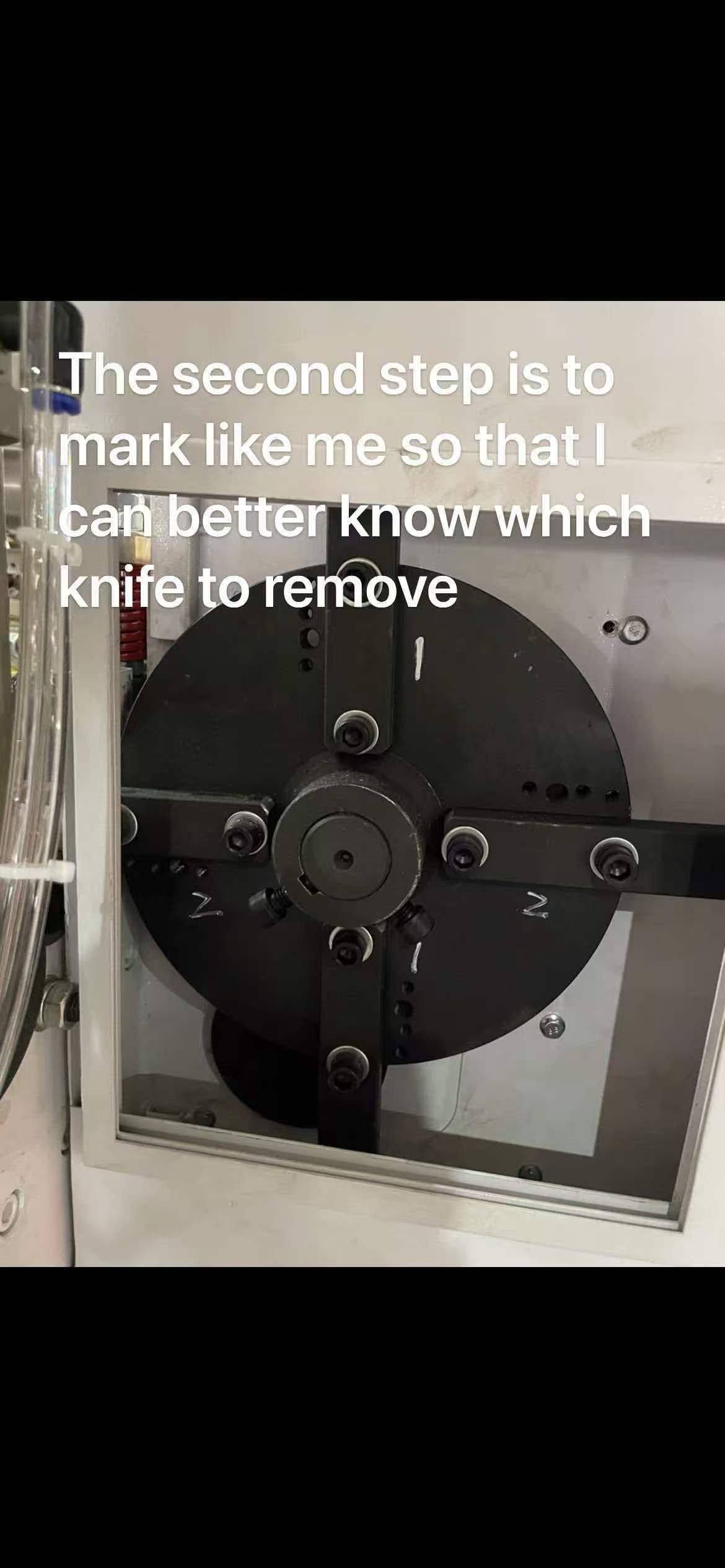
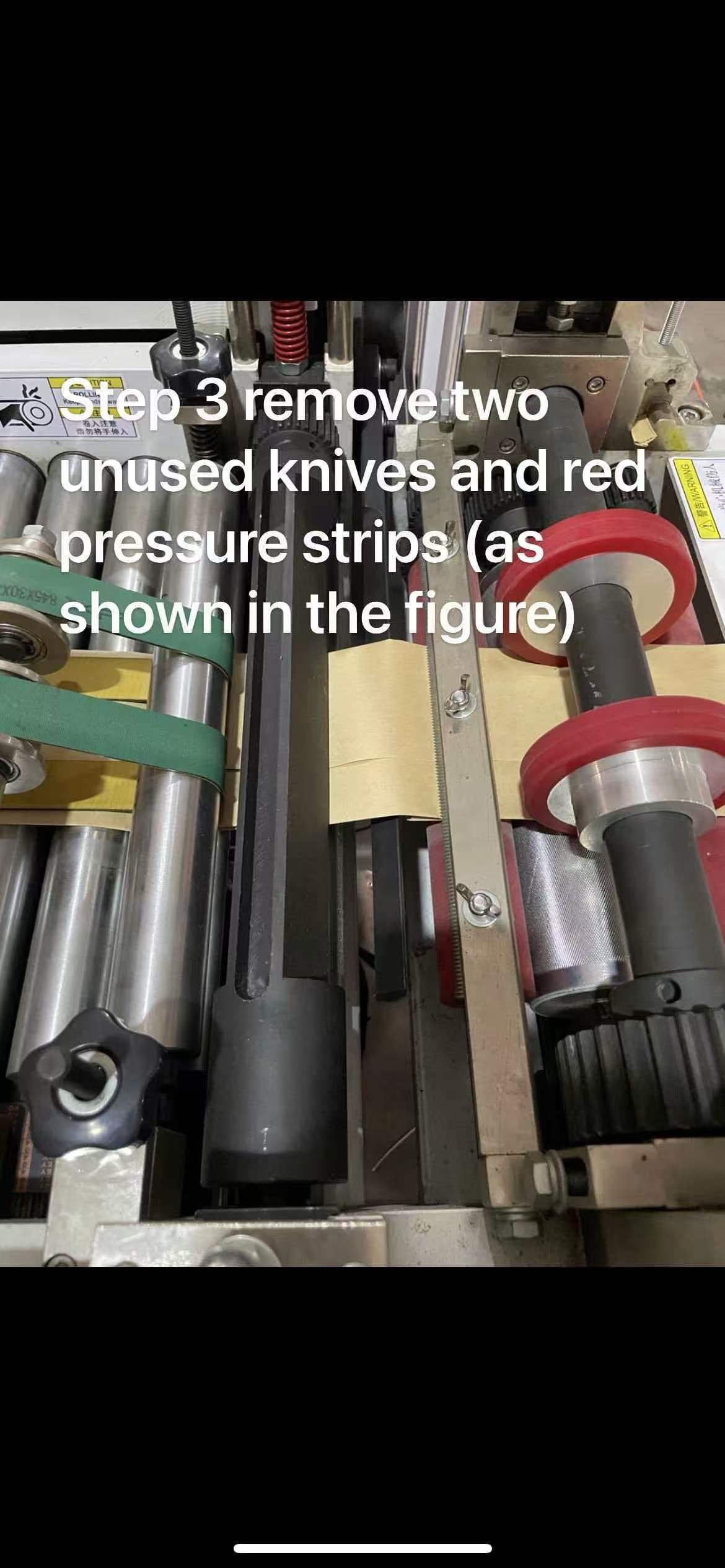
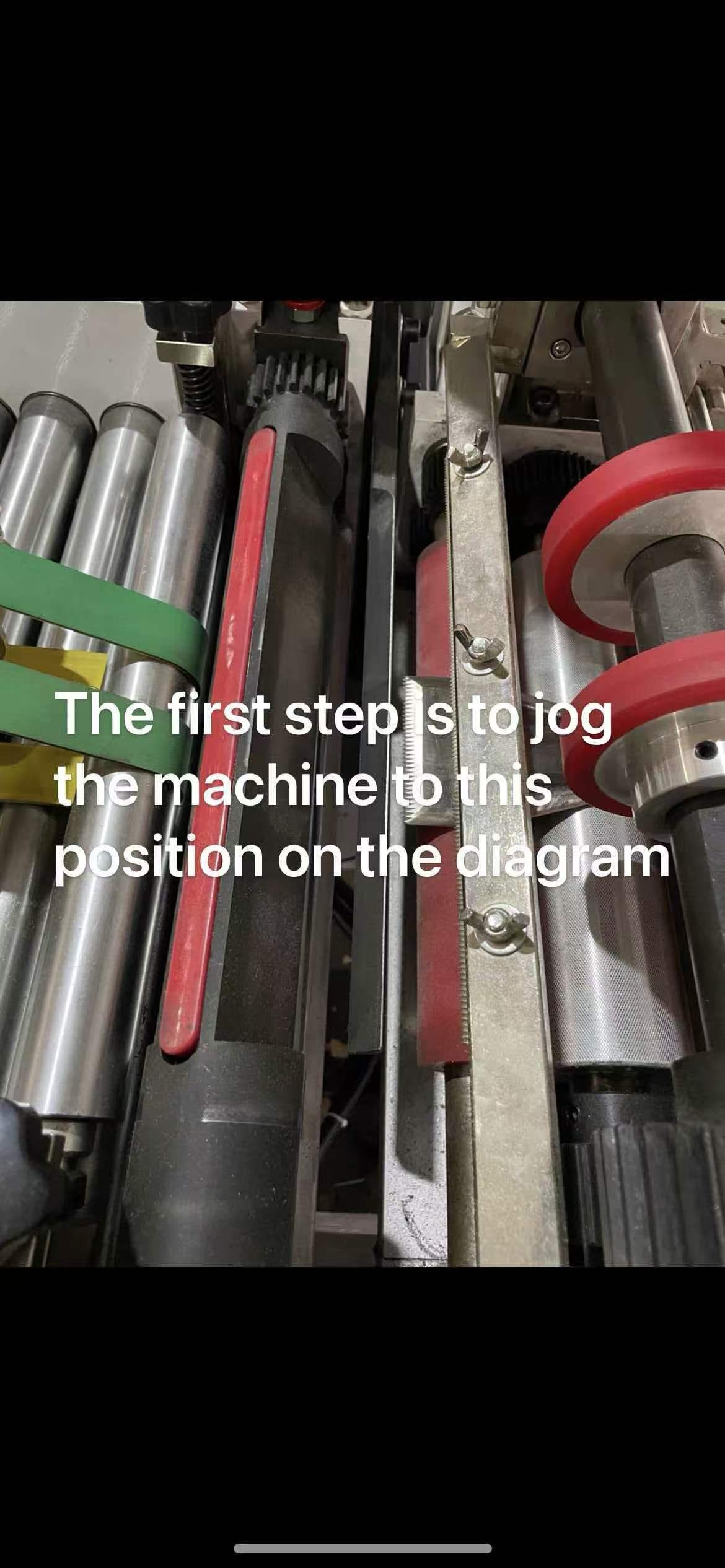
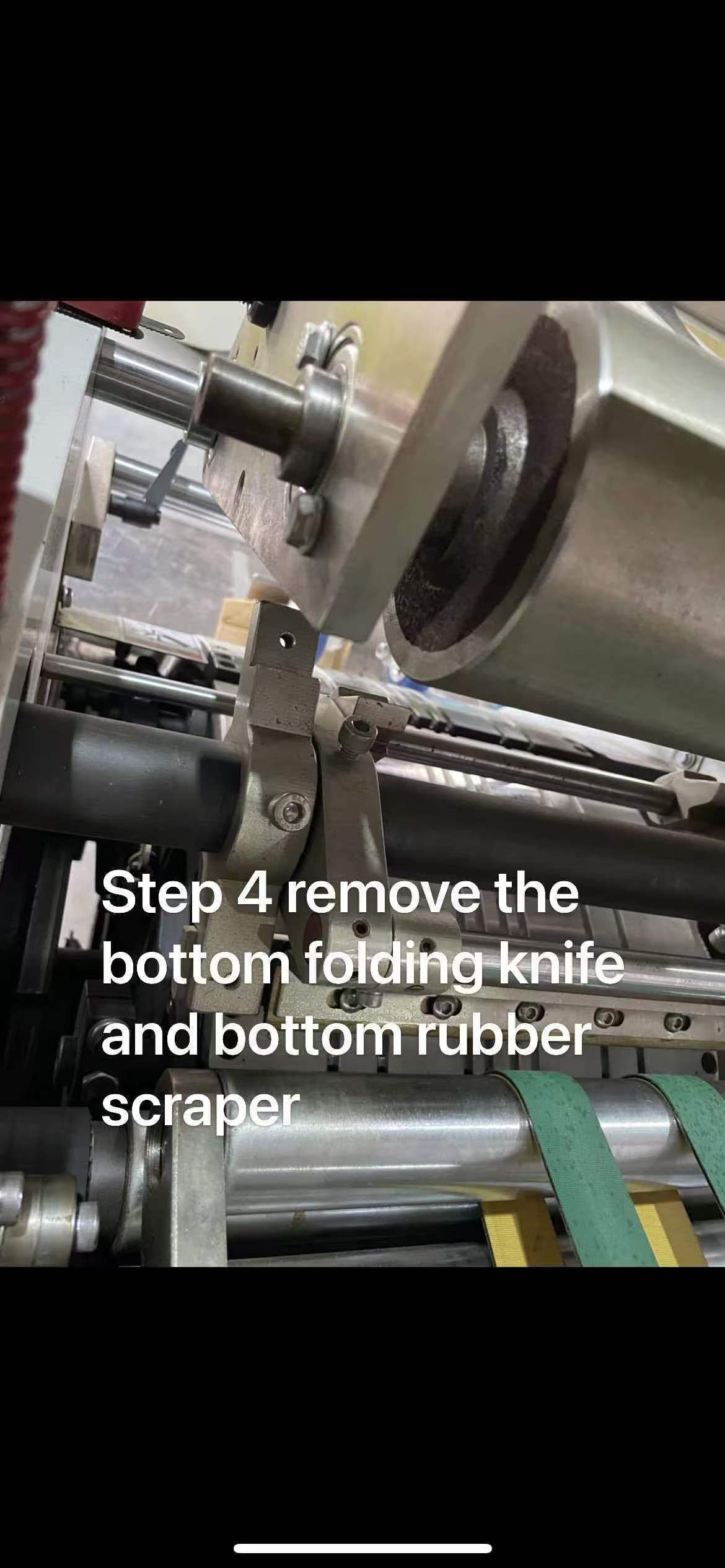
Because the same four steps apply every time, the procedure becomes routine for your own operators. After the first change, the next one is a short job that a trained member of your own team can do during a normal break, instead of a service visit that stops the machine and adds to your cost per running hour.
Machine Specifications Compared
These are the factory standard figures for the two ranges. Nothing here is a best case: the speeds are the rated output at the stated paper thickness, and the dimensions and weights are the installed figures for planning.
| Specification | Pre-Cut Sharp Bottom JD-270 / JD-350 | Interruptive V Bottom JD400 / JD650 / JD850 |
|---|---|---|
| Bag length (mm) | 100–355 / 360–445 · 150–395 / 400–760 | 110–480 · 220–650 · 140–750 |
| Bag width (mm) | 80–270 · 80–350 | 70–260 · 80–350 · 70–450 |
| Side gusset (mm) | 20–120 | 20–100 · 20–120 · 20–190 |
| Paper thickness | 35–80 g/m² | 40–80 g |
| Machine speed (pcs/min) | 50–600 · 50–500 | 40–650 · 40–600 · 60–400 |
| Paper roll width (mm) | 220–810 · 220–970 | 200–740 · 220–960 · 220–1300 |
| Bottom flap height | 17 mm | — |
| Inline window pasting | Yes — film 50–200 mm wide, 0.012–0.037 mm thick | No |
| Installed power | Three phase 380 V, higher due to servo drives and the window unit | 6 kW · 8 kW · 10 kW |
| Machine size (mm) | 7100 × 2050 × 1850 · 8500 × 2250 × 1850 | 4400 × 1700 × 1600 · 4800 × 2000 × 1600 · 6500 × 2500 × 2100 |
| Machine weight (kg) | 5000 · 6000 | 2000 · 4300 · 5000 |
Two numbers in that table are worth pausing on. The JD400 interruptive machine is rated up to 650 pieces per minute, which is higher than the 600 pieces per minute of the JD-270 pre-cut machine — the interruptive range is not the slower option. And at 2000 kg and 4400 mm long, the JD400 needs less than a third of the floor space and less than half the installed weight of the JD-270, which is where most of the price difference comes from.

What the Pre-Cut Sharp Bottom Machine Adds
The pre-cut range is the right platform when your bag specification calls for something specific. Its two defining features are the perforated-then-recut bottom edge and the inline window pasting station.
- A clean, straight bottom edge. Because the paper is perforated before it is cut, the customer opens the bag along a controlled line. The result is a neat bottom with no ragged edge, which is what premium and retail packaging buyers ask for by name.
- Independent servo control of the two actions. The perforation and the cut are driven separately, so the perforation depth, the cut timing and the position of each can be adjusted to suit the paper. This is what makes a consistent edge possible across a production run rather than only on one sample bag.
- Inline window pasting as standard. The JD-270 and JD-350 apply a clear film panel of 50–200 mm width and 0.012–0.037 mm thickness directly in the line, giving a finished windowed bag in a single pass with no separate machine.
- A bottom flap of 17 mm. The extra flap height gives room for a reinforcement layer on the base, which is useful where the bag is loaded heavily.
- Handles thinner paper. 35–80 g/m² against 40–80 g on the interruptive range, which matters for lightweight bag constructions.
The trade is a larger, heavier machine with more mechanical sections to maintain, a higher power draw and a higher purchase price. That is a sensible trade for premium retail, gift and bakery packaging, for windowed bags, for reinforced bases under heavy loads, and for buyers who inspect the bottom edge closely. For everything else — food service packing, takeaway bags, general kraft and white bag catalogues, a new line on a sensible budget — the interruptive machine gives you the same output with a simpler machine behind it.
Which Machine Should You Choose?
| Your situation | Recommended machine | Why |
|---|---|---|
| Starting a new paper bag line on a budget | Interruptive V bottom | Best price-to-performance, no compromise on output speed |
| Volume production, output is the priority | Interruptive V bottom | Up to 650 pcs/min, lowest power draw, simplest to service |
| Factory floor space or floor loading is tight | Interruptive V bottom | 4400 mm long and from 2000 kg |
| Wide bag catalogue, many formats | Interruptive V bottom | 70–450 mm width across three models, gusset to 190 mm |
| Your team should handle servicing in house | Interruptive V bottom | Four-step knife change, no servo software, no specialist call-out |
| Premium retail, gift or bakery packaging where the bottom is on show | Pre-cut sharp bottom | Clean, straight bottom edge on every bag |
| The bag needs a window | Pre-cut sharp bottom | Inline window pasting built into the machine |
| Reinforced base required for heavy loads | Pre-cut sharp bottom | 17 mm bottom flap allows a reinforcing layer |
| Lightweight paper constructions | Pre-cut sharp bottom | Handles paper from 35 g/m² |
If you are still unsure, a practical rule works well: buy the interruptive machine if the bag has to work, and buy the pre-cut machine if the bag has to look right. The finish difference is small on a bag that is filled and sealed in the same second, and obvious on a bag that sits on a shelf or is opened by hand at the point of sale.
Frequently Asked Questions
Is the interruptive V bottom machine really as fast as the pre-cut machine?
Yes. The JD400 is rated at 40 to 650 pieces per minute and the JD650 at 40 to 600, while the pre-cut JD-270 runs at 50 to 600 and the JD-350 at 50 to 500. The interruptive machine performs fewer operations per bag, so it is not the slower of the two — on the smallest model it is actually the faster one.
How long does a knife change take?
Four steps on the JD range: jog to the marked position, mark the knife you are removing, take out the two unused knives and the red pressure strips, then remove the bottom folding knife and the bottom rubber scraper. All of it is done at the front of the machine with the guard open, so your own trained operator can carry it out rather than waiting on an external service visit. We have documented the procedure step by step with photographs, and it is the same sequence every time — which is what makes it quick on the second and third change, not just the first.
Why does the pre-cut machine need separate servo motors?
Because the perforation and the cut are two different operations on two different stations, and they need to be coordinated but not identical. Driving them separately with servo motors lets you set how deeply the paper is perforated and exactly when the cut follows. The perforated line is also what guides the tear, which is why the finished bottom edge comes away straight rather than following the knife.
Can the interruptive machine make window bags?
It is difficult, and we do not recommend it. The window is applied by an inline film pasting unit, and the interruptive range does not have one — adding it would take away the simplicity and the cost advantage that made the machine attractive in the first place. If a window is part of the bag specification, the pre-cut JD-270 or JD-350 is the right platform. The clear film specification on those machines is 50–200 mm wide at 0.012–0.037 mm thickness.
Which machine is cheaper to run?
The interruptive machine, on three counts: it draws less power, it has fewer parts that wear or need adjustment, and the routine service work is a short four-step job your own team can do. Over a production lifetime those three differences usually exceed the gap between the two purchase prices several times over. The one item that can offset this is labour — the pre-cut machine feeds faster if a person is loading and bagging by hand — which is why the fully automatic versions are worth comparing on a total cost basis rather than on the machine price alone.
Can the bag formats be changed on either machine?
Yes, within the range each model covers. The pre-cut machines cover 80–270 mm and 80–350 mm bag width in two lengths each, and the interruptive range covers 70–450 mm across three models with side gusset from 20 mm up to 190 mm. Send us the sizes you actually want to run and we will confirm which model covers them.
See the Machines Running
Both ranges are available to see in production. The full specification sheets, drawings and price lists are on the machine pages:
- Pre-Cut Sharp Bottom Paper Bag Making Machine (JD-270 / JD-350) — inline window pasting, servo-driven perforation and cut, clean bottom edge.
- Interruptive V Bottom Paper Bag Making Machine (JD400 / JD650 / JD850) — knife-interrupted bottom, up to 650 pcs/min, four-step knife change, the best price-to-performance ratio in the range.
Tell us the bag size, the paper weight and your monthly output and we will recommend the model and configuration that fits, with a full specification sheet, a layout drawing and an indicative price. Every machine is built to order, so the more specific your bag requirement, the more useful the quotation will be.
Comments are closed