Sheeting Machine Manufacturer in China — Roll to Sheet, Rotary Blade & Label Roll Cutters
TWMACHINE manufactures sheeting and roll cutting machines for converters who supply cut sheets or precut label rolls. The range covers four machine types: the standard roll-to-sheets cutting machine for converting film and paper into flat sheets, the medium speed sheeting machine with slitting capability, the high speed rotary blade cutting machine for running narrow webs, and the label roll cutting machine for self-adhesive stock. Below are the real factory specifications — working width, cutting length, cutting precision, material thickness, speed, power and footprint — so you can size the machine against the material you run.
Our Sheeting Machine Range
Each card links to the full specification sheet and price list. The comparison table and selection guide that follow use the same factory data.


What Is a Sheeting Machine?
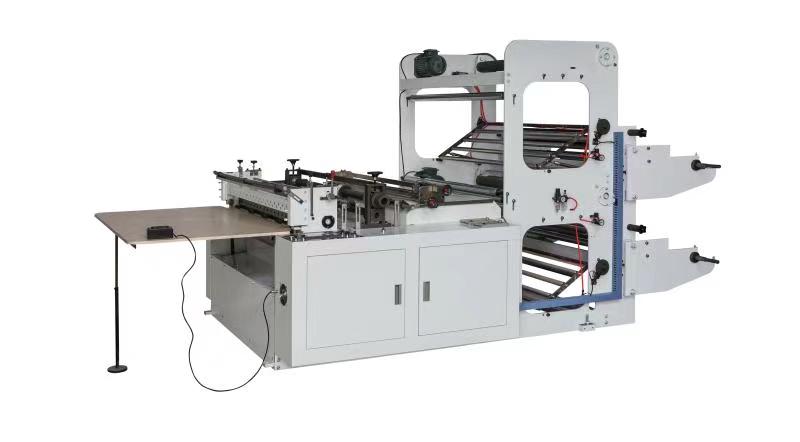
A sheeting machine cuts a continuous web of material into flat sheets of a fixed length. The web is unwound, tensioned and fed through a slitting section that divides it into lanes, then through a rotary cutting knife that cuts across the web at the set sheet length. The cut sheets drop onto a stacker or a conveyor. Because the cut is made across the moving web rather than one sheet at a time, the process is fast and the sheet length is held to a fixed tolerance regardless of line speed.
The distinction between the machine types is how the slitting and cutting are arranged. The standard roll-to-sheets cutting machine uses a fixed knife station and runs the web at a set speed with the sheet length set by the knife rotation. The medium speed sheeting machine adds a slitting section ahead of the cutter, so one wide roll can be cut into several lanes of sheets simultaneously. The high speed rotary blade machine uses a drum with mounted blades for fast cutting on narrow webs, and the label roll cutting machine is built for the short, precise lengths used in self-adhesive label converting.
Sheeting Machine Models and Technical Specifications
The table compares the models for which we publish the standard data. Working width is the width of material the machine accepts; the smaller models are often chosen because of the power supply and the floor space rather than the capacity.
| Model | Machine type | Working width (mm) | Cutting length (mm) | Thickness | Speed | Power (kW) | Machine size (mm) |
|---|---|---|---|---|---|---|---|
| HQ-600 / HQ-800 / HQ-1000 / HQ-1200 | Roll to sheets cutting | 530 / 730 / 930 / 1130 | 50–1200 | — | 10–50 m/min cutting, 180 m/min machine | 5 / 5 / 6 / 7 | 2500 × 1300–1900 × 1500 |
| HQ-1100 / HQ-1300 / HQ-1500 | Medium speed sheeting with slitting | 50–1100 / 50–1300 / 50–1500 | 20–1200 | 20–200 g | 20–200 pcs/min, 10–180 with slitting | 8 / 10 / 13 | 4200 × 1900–2300 × 1600 |
Cutting precision on the medium speed machines is ±0.2 mm, which is the figure to compare against your own tolerance requirement. The HQ-600 runs on single phase 220 V and 5 kW, so it can be installed in a small converting room with no three phase supply, while the HQ-1500 needs three phase and 13 kW and takes 4200 × 2300 × 1600 mm of floor space.
Main Applications of Sheeting Machines
- Packaging film sheets — cutting BOPP, CPP and PET film into sheets for further processing, thermoforming or slitting on a separate line.
- Paper and board conversion — cutting kraft, white board and coated paper into sheets for folders, box making and printing.
- Self-adhesive label stock — cutting label material into short rolls at the precise lengths the die cutting and peeling line needs.
- Foam and sheet products — cutting EVA, PE foam and other thicker sheet material where the blade type and the hold-down pressure matter.
- Raffle and woven sack tape — cutting PP raffia tape to length for woven sack weaving lines.
- Tolerance critical slitting work — the medium speed machine with slitting produces several lanes of sheets from one wide roll in a single pass, which cuts handling and waste.
How to Choose the Right Sheeting Machine
Sheet length and material thickness decide the machine. Speed and lane count decide how much you spend. Work through these in order.
- What sheet length do you need — the roll-to-sheets machines cover 50 to 1200 mm and the medium speed machines 20 to 1200 mm. If you cut short lengths for label stock or long sheets for board, the length range is the first filter.
- How thick is the material — the medium speed machines are rated for 20 to 200 g. Heavier board or foam needs a different blade, more hold-down force and a slower speed.
- How precise must the cut be — the medium speed machines hold ±0.2 mm. If your customer specifies a tighter tolerance, check it against the machine rather than assuming.
- One lane or several — the medium speed machine slits and cuts several lanes at once, which is far more efficient on wide rolls. The standard roll-to-sheets machine handles a single lane and is the right choice for narrow or specialty work.
- Speed — the standard machines run the web at 10 to 50 m/min while the machine itself reaches 180 m/min. The medium speed machine delivers 20 to 200 pieces per minute, dropping to 10 to 180 when slitting at the same time.
- Power and floor space — the HQ-600 is 5 kW on single phase and fits in 2500 × 1300 mm. The HQ-1500 is 13 kW on three phase and needs 4200 × 2300 mm. Check the supply and the space before choosing.
Why Buyers Choose TWMACHINE
- Four machine types in one range. Standard roll-to-sheets, medium speed with slitting, high speed rotary blade and label roll cutting, so the machine can follow the material rather than the other way round.
- Factory-direct pricing. The knife stations, slitting section, tension control and drive are built in our own workshop, which is what decides the price on the multi-lane machines.
- Published precision — the cutting tolerance of ±0.2 mm on the medium speed machines is stated as a factory specification rather than being left vague.
- Single phase options — the smaller standard machines run on 220 V, so a converter without three phase supply is not forced into an upgrade.
- Configured to your material. Knife type, lane count, tension control, automatic sheet counting and stacking, and delivery speed are specified per order, and machine dimensions, weight and power are confirmed on the order.
Frequently Asked Questions
What is the difference between a sheeting machine and a roll to sheets cutting machine?
The roll-to-sheets cutting machine cuts one lane of material into sheets, and it is the simpler and cheaper machine. The sheeting machine adds a slitting section before the cutter, so a wide roll is first divided into several lanes and each lane is then cut into sheets in the same pass. That means one wide roll produces several stacks of sheets at once, which reduces handling and waste and is normally the reason to choose a sheeting machine over a standard roll-to-sheets machine.
How accurate is the cut length?
The medium speed sheeting machines hold the cutting length to ±0.2 mm, and the accuracy holds across the speed range because the cut is made by a rotary knife synchronised to the web. The standard roll-to-sheets machines use a fixed knife station with the length set by rotation, so their tolerance is looser. If your application is self-adhesive label stock, where the length tolerance directly affects the die cutting and peeling line, this is the specification to check.
Can these machines cut and slit at the same time?
The medium speed sheeting machines are built for it, with a slitting section in front of the rotary cutter. Production speed with slitting is 10 to 180 pieces per minute, against 20 to 200 without slitting, because the material has to pass through the slitter as well. The standard roll-to-sheets machines do not have a slitting section; if you need both, the medium speed machine is the correct choice rather than combining two machines.
What material thickness can be cut?
The medium speed machines are rated for 20 to 200 g, which covers paper, board, film and light foam. Thicker material needs a different blade geometry and more hold-down pressure, and the running speed has to come down accordingly. Send us the material and the thickness and we will confirm the blade and the recommended speed with the quotation.
Request a Quotation
Send us the material, the thickness, the roll width, the sheet length you need and your required output. We will recommend the machine type and size that fits, with a full specification sheet and an indicative price. If you are cutting material that is currently going through a manual process, tell us what that looks like — the machine selection often changes once the real tolerance requirement is known.