Plastic Bag Making Machine Manufacturer in China — Models, Specifications & Selection Guide
TWMACHINE has built plastic bag making equipment since 2008 for converters who package food, chemicals, garments, courier parcels and municipal waste. This page covers the full plastic bag machine range we manufacture — side sealing, bottom sealing, T-shirt, zipper welding, drawstring garbage bag, courier bag and pre-open bag machines — with the real specifications of each model: bag length and width limits, film thickness, output in pieces per minute, installed power, footprint and weight. Use the comparison table to shortlist a machine, then the selection guide to confirm it against your film and bag format.
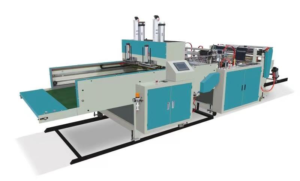
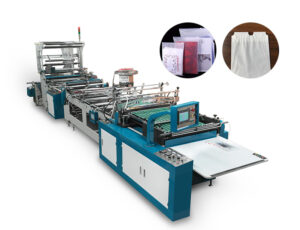
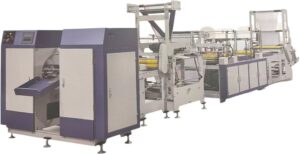
Our Plastic Bag Making Machine Range
Every model below links to its own specification sheet, application notes and price list. The comparison table and selection guide that follow are built from the same factory data.
What Is a Plastic Bag Making Machine?
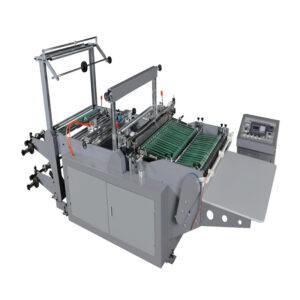
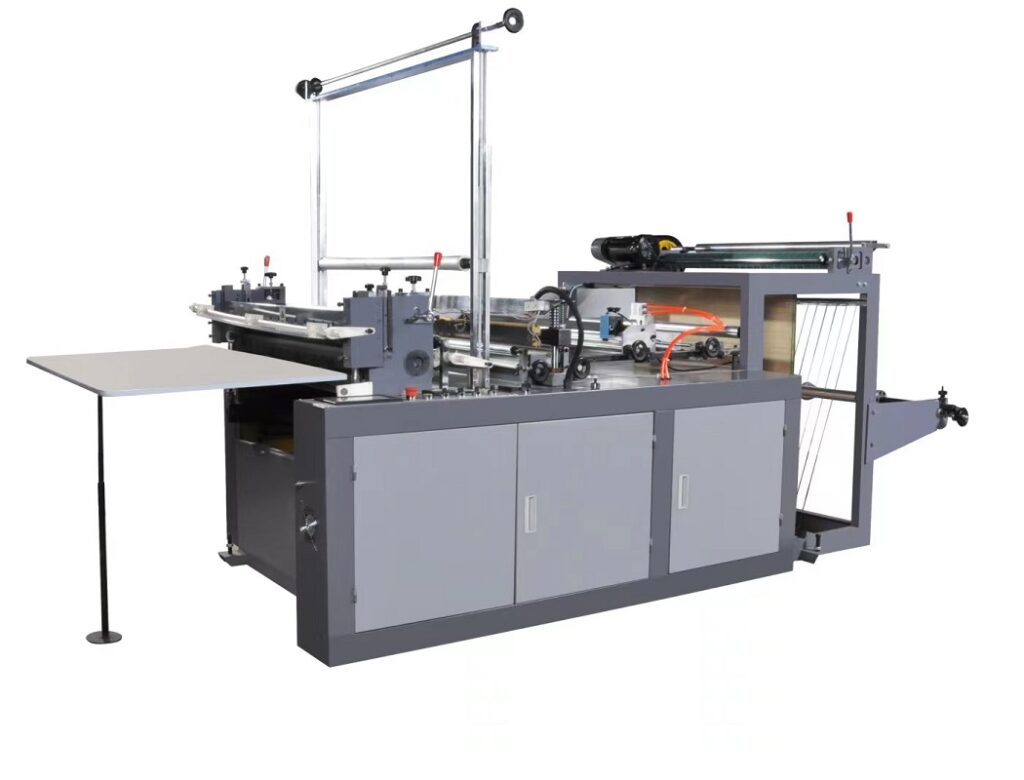
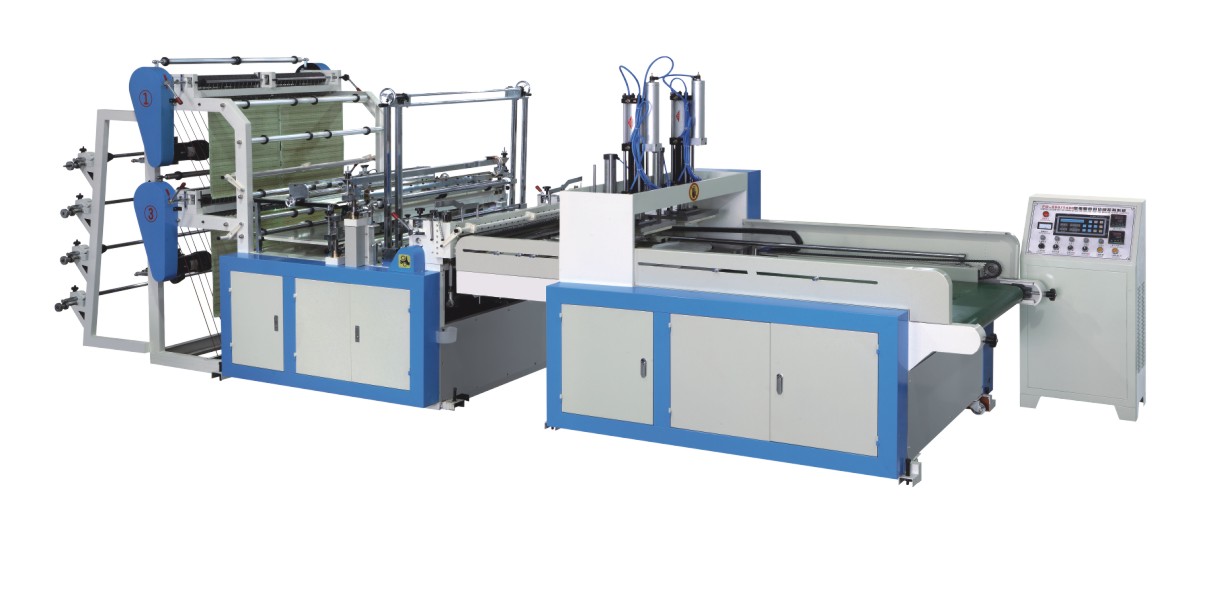
A plastic bag making machine forms finished bags from a continuous film tube or a flat web. The machine pulls film from an unwind station, feeds it through a forming collar or tube that shapes the material into a tube, and then carries out the sealing operation that defines the bag type — a bottom seal for flat-bottom bags, a side seal for T-shirt bags, or a handle-and-drawstring system for garbage bags. The bag is finally cut from the tube and stacked or conveyed away.
Most machines in this range run on LDPE, HDPE, PE and PP film, typically 0.02 mm to 0.2 mm thick depending on the model. The sealing method — heat sealing, ultrasonic sealing or hot knife — is what decides the machine class. Hot knife sealing suits PE and PP; ultrasonic sealing gives a cleaner seal on thicker material and is common on food grade bags. Bag making machines are normally fed by an extruder-produced film tube, but several of the models below accept a single-layer flat film roll, which is useful if you buy film from a third party rather than running your own blown film line.
Plastic Bag Machine Models and Technical Specifications
The table compares the main models across the range. Power consumption and machine weight are the factory standard values; number of lanes, servo or mechanical drive and sealing type can be specified for your order.
| Model | Machine type | Bag length (mm) | Bag width (mm) | Film thickness | Speed (pcs/min) | Power (kW) | Machine size (mm) |
|---|---|---|---|---|---|---|---|
| DF600 / DF800 / DF1000 / DF1200 | Bottom sealing, flat bag | 200–1200 | 30–500 / 700 / 900 / 1100 | — | 20–120 (100 on DF1200) | 4 / 5 / 6 / 8 | 2500 × 1300–1900 × 1500 |
| DFC800 / DFC1000 / DFC1200 | Automatic T-shirt bag, 2 lines | 200–600 | (30–350/400/500) × 4 | — | 20–120 × 4 | 7 / 8 / 10 | 5800 × 1500–1900 × 2100 |
| SDJ1200 / SDJ1300 / SDJ1400 | Double lines PE courier bag | 470 / 520 | 450 | LDPE 0.05–0.15 mm | 20–320 | 13.5 / 14 / 16 | 9100 × 2350–2550 × 2250 |
| KDJ800 / KDJ1000 / KDJ1300 | Semi-automatic PE courier bag | 400–700 / 500–900 / 500–1200 | 300–600 / 300–700 / 400–700 | LDPE 0.05–0.15 mm | 50–220 | — | 7100 × 2350 × 2250 |
| TWCJ800 / DFC1000 | Full automatic drawstring garbage bag | 400–700 / 500–900 | 300–1000 / 500–1000 | HDPE 0.007–0.02 / LDPE 0.02–0.05 mm | 50–160 | 18 | 10000 × 2000–2200 × 1900 |
| KKD600 | Pre-open courier bag, auto packing | 50–700 | 50–500 | LDPE 0.05–0.15 mm | 40 m/min | 6 | 5580 × 1440 × 1100 |
| DFC800–DFC1200 zipper welding | Zipper welding bag machine | 200–600 | (30–350/400/500) × 4 | — | 20–120 × 4 | 7 / 8 / 10 | 5800 × 1500–1900 × 2100 |
Output scales with the number of lanes as much as with the headline speed. The DFC double-line T-shirt machine running 20–120 pieces per minute per lane produces up to 480 bags a minute across four lanes, which is why it is specified alongside a 10 kW motor on the widest size. Machines that accept a tube film roll are physically shorter — the SDJ courier bag machine is 9100 mm long on a single layer roll but only 6450 mm on a tube film roll, and the machine we build to your space is the tube-roll version.
Main Applications of Plastic Bag Making Machines
- Food packaging — side sealing and bottom sealing machines for bread, snacks, frozen food and takeaway bags, with options for printed film and gusset control.
- Garbage and sanitary bags — the drawstring series produces T-shirt, drawstring and vest bags on HDPE as thin as 0.007 mm, including roll formats for automatic packing lines.
- Courier and e-commerce parcels — double-line and semi-automatic courier bag machines with or without pockets, sized for the T-shirt bag format used by parcel carriers.
- Garment and retail shopping bags — the automatic two-line T-shirt machine covers the classic vest handle format with printed film, in sizes up to 500 mm wide per lane.
- Chemical and industrial packaging — heavier LDPE and PP film for parts, hardware and chemicals, where the sealing jaw and cooling time need to be set higher than for thin film.
- Pre-open bags for automated packing — the KKD600 opens a pre-cut bag and feeds it into a packing line at 40 m/min for high-volume e-commerce fulfilment.
How to Choose the Right Plastic Bag Making Machine
Start with the bag you already sell, not with the machine. Get the finished bag dimensions and the film thickness in writing, then match them against the table above. Two questions decide most purchases: how many lanes do you need, and do you want to make the film yourself or buy it.
- Bag format — the bottom seal gives a flat, stable bag for shelf products; the side seal gives the T-shirt format with a handle; drawstring and zipper welding need their own sealing stations. The format you already have customers for is the format to keep.
- Film thickness — HDPE down to 0.007 mm is only practical on the drawstring machines with five temperature control zones. LDPE and PP at 0.05–0.15 mm suits the courier bag machines. Heavy film needs a larger welding jaw and slower cycle time.
- Output — multiply pieces per minute by lanes. One lane at 100 pcs/min is a very different business from four lanes at 100 pcs/min, and the price difference is much smaller than the output difference.
- Film source — if you run an extruder and produce tube film yourself, choose a machine built for tube film and you save the unwinding and folding section. If you buy flat printed film, you need the flat roll version with an inline printer or an unwinder with dancer control.
- Automation level — semi-automatic machines are cheaper and let an operator bag the output manually. Full automatic machines with a bag counting and conveyor system pay back quickly once labour cost per thousand bags is added up.
- Power and floor space — the DF600 bottom sealing machine runs on single phase 220 V and fits in a small room; the TWCJ drawstring machine is 10 metres long and needs 18 kW on three phase. Check the space and the supply before choosing.
Why Buyers Choose TWMACHINE
- Eighteen years building bag machines. The forming collar, sealing jaw and take-off are the parts that decide whether a bag runs well, and those are the parts we have designed and rebuilt for the longest.
- Factory-direct pricing. The quotation comes from the workshop that assembles the machine, not from a trading company, which is decisive on the double-line and drawstring models where the drive and the sealing station dominate the build cost.
- Seven machine families, one supplier. From a 4 kW single-phase flat bag machine to a 10 metre drawstring line, so a converter can stay with one manufacturer as the business grows.
- Built to your bag, not to a catalogue. Lane count, sealing type, servo or mechanical drive, printer integration, counting and conveyor are specified per order rather than being fixed.
- Service and wear parts. Sealing jaws, cutter blades, belts, heaters and pneumatic components are supplied from stock, and machine dimensions, voltage and power are confirmed on the order so the layout plan is accurate.
Frequently Asked Questions
Can one machine make several bag sizes?
Yes. All the machines in this range are built with adjustable bag length and width, so the same machine covers a size family rather than a single size. The DF600/DF800/DF1000/DF1200 series for example covers bag widths from 30 mm up to 1100 mm across four models, and the T-shirt bag machine adjusts the handle spacing and bag length on the same frame. Tell us the size range you need and we will confirm which model covers it.
Should I buy a machine that also makes the film?
That depends on volume and print. Running your own blown film line gives you control of the film thickness and print registration, and it is cheaper per kilogram above roughly 100 kg per hour of output. Below that, buying printed film from a supplier and running a bag machine alone is usually more economical, and it lets you change bag artwork without changing equipment. If you already run an extruder, specify the tube film roll version of the machine to avoid the unwinding and folding section.
What film thickness can the drawstring garbage bag machine run?
The TWCJ800 and DFC1000 drawstring machines run HDPE film from 0.007 mm to 0.02 mm and LDPE from 0.02 mm to 0.05 mm, with five independent temperature control zones so each sealing and drawing step is set separately. Output is 50–160 pieces per minute and total power is 18 kW. The machine is 10 metres long, so plan the floor space accordingly.
Do you supply the machine with a printer?
Inline printing can be integrated on most of the bag machines, either as a single colour or multi colour flexographic unit with a separate dryer. We normally recommend supplying printed film for the T-shirt and courier bag machines, because in-line printing at these speeds limits the colour range and adds a dryer to the line length. The quotation includes the machine as configured, so tell us whether you want film printing included and we will price both options.
Request a Quotation
Send us your bag dimensions, film type and thickness, required output and the power supply you have available. We will recommend the model and lane configuration that fits, with a full specification sheet, a factory layout drawing and an indicative price. Because every machine is built to order, sharing the bag format you already sell gets you a machine that runs your product rather than a generic specification.