Paper Bag Making Machine Line Manufacturer in China — Square Bottom, V Bottom & Sharp Bottom
TWMACHINE has built paper bag making machine lines since 2008 for supermarkets, packaging converters, printing companies and bakeries. A complete line covers feeding, forming, printing, handle attachment and bag cutting, and the range here covers the three bag structures that dominate the market: square bottom bags with a flat base for grocery and takeaway, V bottom bags for bread and fast food, and pre-cut sharp bottom bags with a glued flap for windowed packaging. Below are the real specifications of each model — bag dimensions, paper thickness, speed in pieces per minute, paper roll width, power, footprint and weight — so you can match a line to the bag you actually sell.
Our Paper Bag Machine Line Range
Each card links to the full specification sheet, bag format details and price list. The comparison table and selection guide that follow use the same factory data.

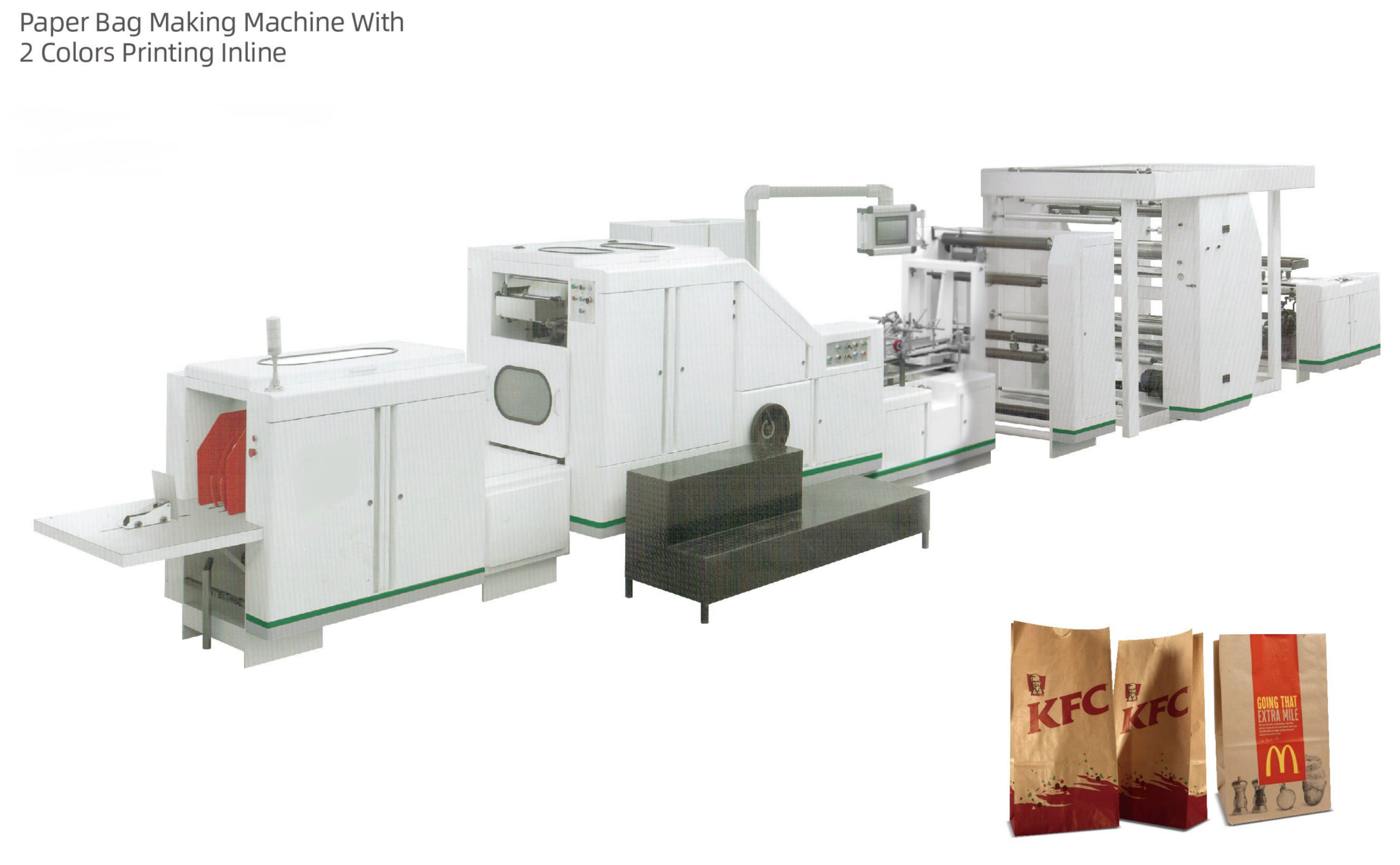
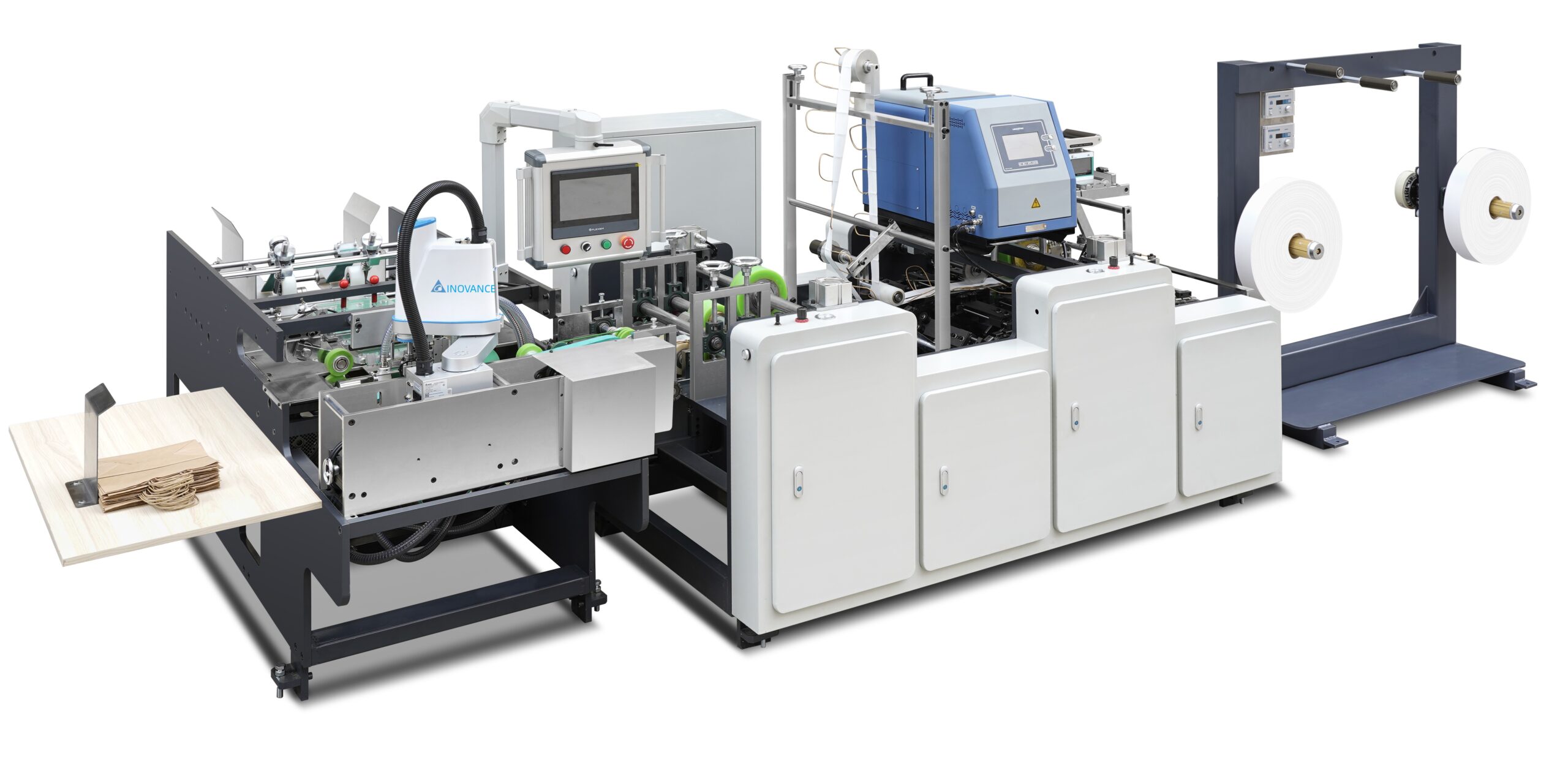
What Is a Paper Bag Making Machine Line?
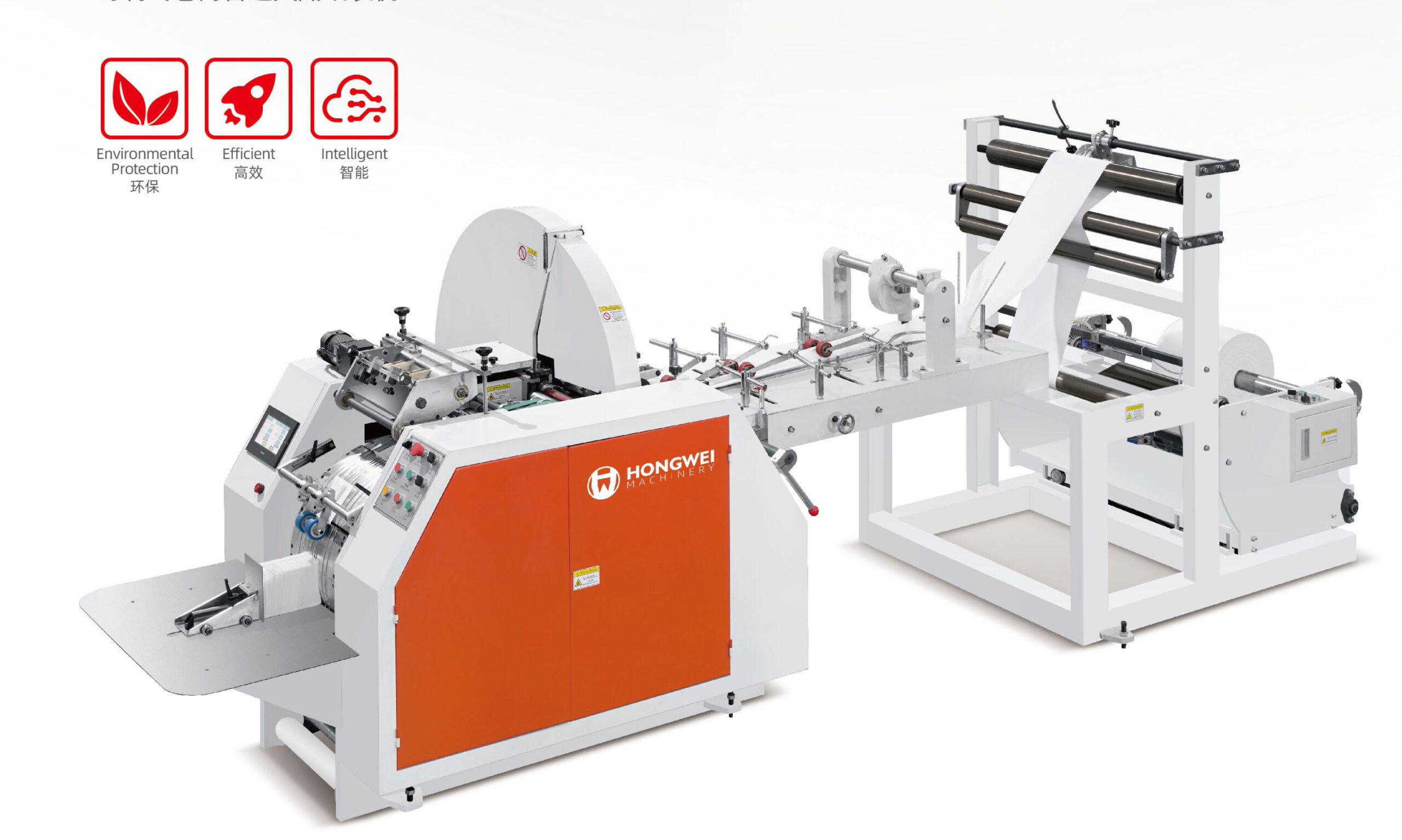
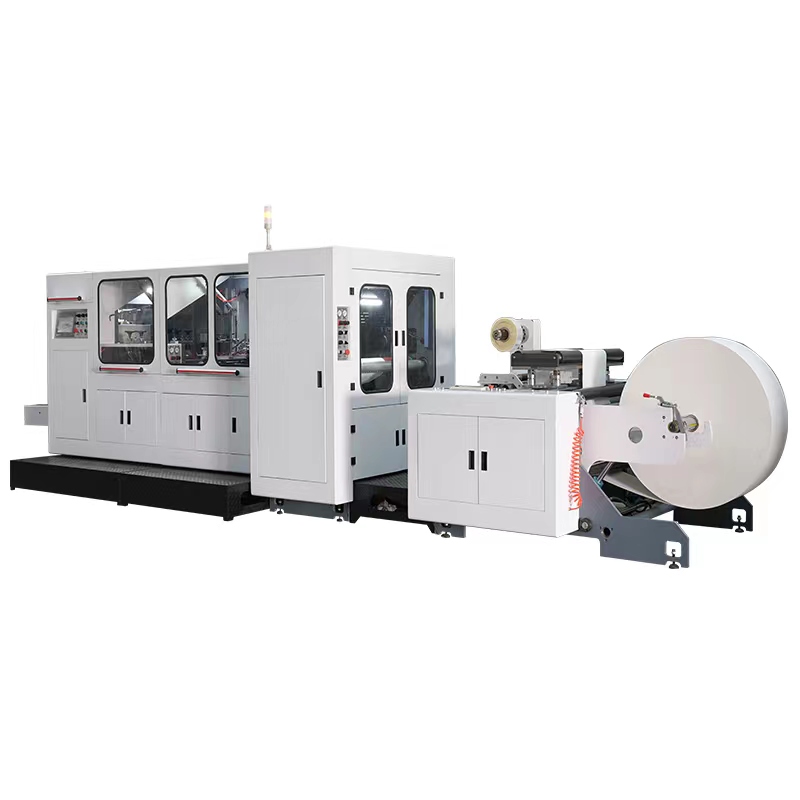
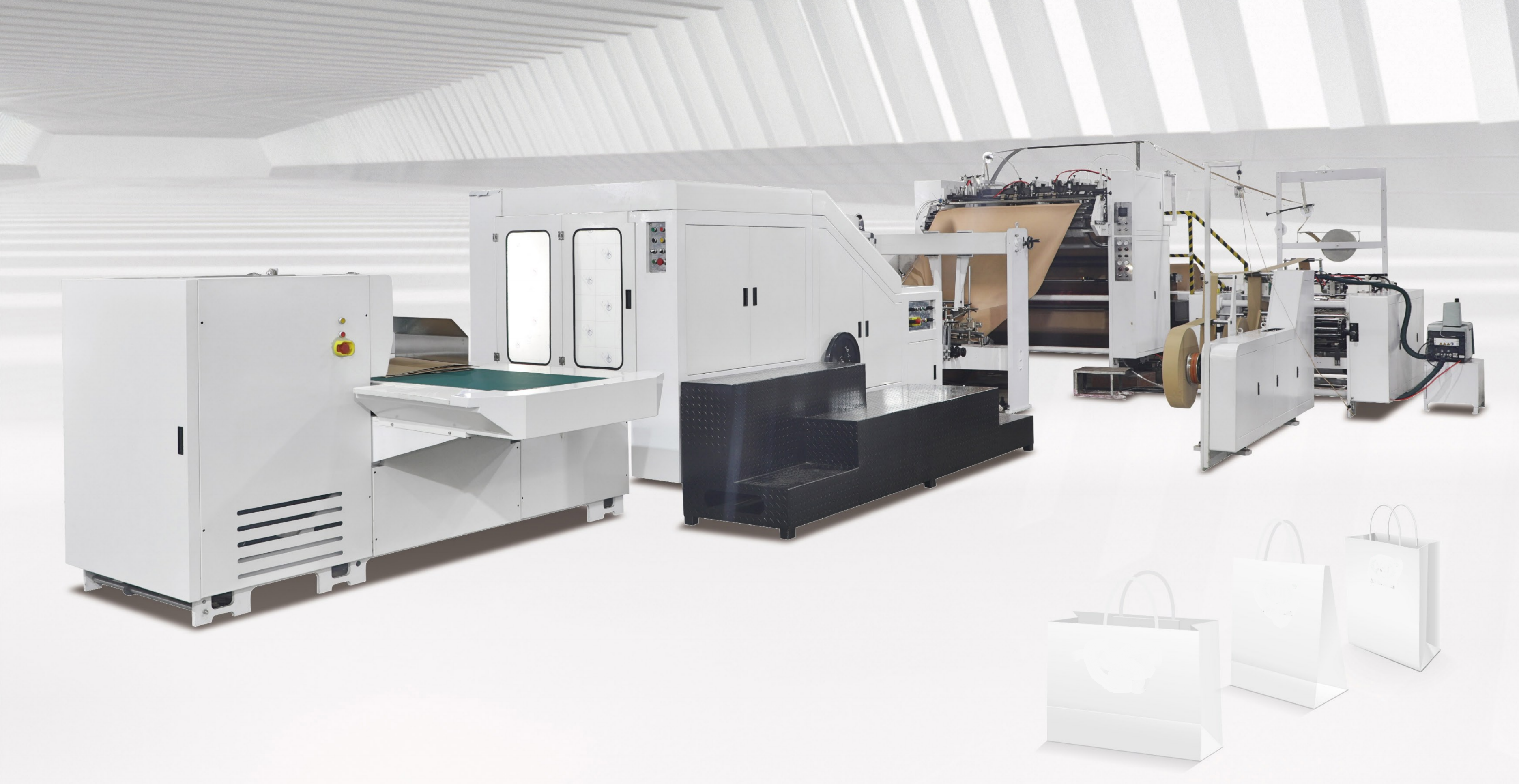
A paper bag making machine takes a roll of kraft or white paper, forms it into a tube, shapes the bottom, glues or stitches the side seam, prints on the tube, attaches the handle if the format needs one, and cuts the finished bags off. The machines are built around a forming tube: the paper is glued along one edge and wrapped around the tube, which closes the side seam and establishes the bag width. Bottom shaping then depends on the bag type, and that is where the square bottom, V bottom and sharp bottom machines differ from each other.
A square bottom machine folds the tube into a flat, reinforced base that lets the bag stand upright and carry a load — the format used for grocery shopping bags, takeaway carriers and general retail packaging. A V bottom machine inserts a shaped plate that pushes the bottom into a V, which is fast, strong and the standard choice for bread bags and bakery packaging. A pre-cut sharp bottom machine cuts the bottom blank and glues a separate flap on, which allows a window, a reinforcement patch or a printed bottom, and gives the sharpest print registration of the three.
All three formats can be built as a single machine with an optional printing unit, or as a line with a separate printing machine, an automatic handle unit and a bag collecting conveyor. The FD and JD model families below cover the mainstream sizes; larger formats and higher speeds are configured on order.
Paper Bag Machine Models and Technical Specifications
The table compares the mainstream models. Air consumption is 0.6 MPa for the square bottom machines, the side gusset depth and paper thickness ranges differ by format, and the machine footprint grows with the bag size.
| Model | Bag type | Bag length (mm) | Bag width (mm) | Bottom width (mm) | Paper (g/m²) | Speed (pcs/min) | Power (kW) | Machine size (mm) |
|---|---|---|---|---|---|---|---|---|
| FD220 | Square bottom | 150–320 | 80–220 | 50–100 | 50–130 | 30–200 | — | — |
| FD330 | Square bottom | 225–470 | 150–330 | 60–180 | 60–160 | 30–160 | — | — |
| FD450 / FD450B | Square bottom | 210–460 / 320–680 | 220–450 / 200–450 | 80–220 | 80–160 | 30–150 / 30–120 | — | — |
| FD540 | Square bottom | 320–680 | 250–540 | 120–260 | 90–160 | 30–120 | — | — |
| FD330T / FD450T / FD540T | Full automatic with handle | 225–370 / 225–370 / 380–490 | 220–330 / 290–450 / 320–540 | 60–180 / 80–220 / 120–260 | 60–160 / 80–160 / 90–160 | 30–120 | — | 14000 × 5800–6000 × 2400–3400 |
| JD400 / JD650 / JD850 | V bottom | 110–480 / 220–650 / 140–750 | 70–260 / 80–350 / 70–450 | — | 40–80 | 40–650 / 40–600 / 60–400 | 6 / 8 / 10 | 4400 × 1700 × 1600 → 6500 × 2500 × 2100 |
| JD-270 / JD-350 | Pre-cut sharp bottom, inline window pasting | 100–355 / 150–395 | 80–270 / 80–350 | flap height 17 | 35–80 | 50–600 / 50–500 | — | — |
Two figures in the range deserve attention. The V bottom JD850 runs at up to 400 pieces per minute on a larger format, which is what a high-volume bakery or supermarket line needs. The FD330T, FD450T and FD540T handle machines are the fully automatic bag-with-handle format — they measure 14 metres long, weigh 12 to 23 tonnes and need a prepared foundation, which is why they are normally specified as a project rather than a single machine.
Main Applications of Paper Bag Machine Lines
- Grocery and supermarket shopping bags — square bottom bags in white or recycled kraft, with or without a handle, printed with the store branding.
- Bakery and bread packaging — V bottom bags for loaves, buns and pastries, where the flat V base is the traditional format and the machine speed matters most.
- Takeaway and fast food carriers — square bottom bags sized for the food service trade, often with a window and a handle.
- Garment and retail shopping bags — mid and large square bottom and sharp bottom formats with rope or paper handles, printed multi colour.
- Wine, gift and premium packaging — sharp bottom with a glued flap and window, giving a flat printed base and a cleaner finish than a folded bottom.
- Industrial and heavy duty sacks — larger paper formats for cement, chemicals and agricultural products, usually on the FD450B and FD540 platforms with reinforced bottom.
How to Choose the Right Paper Bag Making Machine
The bag format comes first because it decides the machine family, and everything else follows from the bag you need to sell. Work through these in order.
- Which bag do your customers buy — square bottom for anything that has to stand and carry weight, V bottom for bread and bakery, sharp bottom when the base is printed, windowed or reinforced. Do not change format to suit the machine; change the machine to suit the format.
- Bag size range — the FD220 covers small bags up to 320 mm long and 220 mm wide, while the FD540 reaches 680 mm by 540 mm. A single machine normally covers one size family, so decide the smallest and the largest bag you need and size the machine to both.
- Paper thickness — the square bottom machines run 50 to 160 g/m², the V bottom machines 40 to 80 g/m² for lighter bakery paper, and the sharp bottom machines 35 to 80 g/m². Heavier paper needs stronger forming and a longer glue dwell, and it slows the machine.
- Print requirement — in-line printing on the tube gives one or two colours with registration limited by the tube curvature. For multi colour artwork, or for print on the bottom panel, put a separate flexographic printing machine in front of the bag machine.
- Handle format — if the bag needs handles, the fully automatic handle machines include the twisting and pasting station. Otherwise the separate paper handle attaching machine handles 30–40 pieces per minute and fits many bag sizes.
- Automation level — the JD V bottom machines run semi-automatically with a manual bag taking station; the FD square bottom machines can be specified fully automatic with a conveyor and automatic counting. The productivity difference between them is roughly a factor of three.
- Foundation and space — the automatic handle machines are 14 metres long and weigh up to 23 tonnes, so they need a reinforced floor and a prepared electrical supply. Check the site before committing.
Why Buyers Choose TWMACHINE
- All three bag formats from one manufacturer. Square bottom, V bottom and pre-cut sharp bottom machines plus handle equipment and printing, so a converter who changes format does not change supplier.
- Factory-direct pricing. The forming tube, gluing unit, bottom folder and printing station are built in our own workshop, which is what decides the price on the large FD platforms.
- Real output figures. The speeds published here are the factory standard speeds with the stated paper thickness, not a best case from a promotional film.
- Specified per order. Bag size, paper thickness, printing units, handle type, automatic take-away, counting and conveyor are configured for the job rather than fixed.
- Service and wear parts. Forming tubes, belts, cutting knives, gluing units, bearings and heating elements are supplied from stock, and foundation drawings, power requirements and weights are confirmed on the order.
Frequently Asked Questions
Which bag format should I choose?
Square bottom is the most versatile and the right default if you are not tied to one customer, because the flat base stands upright and carries weight. V bottom is the traditional bakery format and is faster to run, but the base is narrower and it does not stand as well when empty. Sharp bottom with a glued flap gives the best print and allows a window or a reinforcement patch, at the cost of more processes per bag. If your customers already specify a format, match it exactly.
Can one machine produce several bag sizes?
Each model covers a size range rather than a single size. The FD330 produces bags from 225 to 470 mm long and 150 to 330 mm wide, the FD450 from 210 to 460 mm and 220 to 450 mm wide, and the FD540 up to 680 by 540 mm. The adjustments are mechanical and take minutes, so one machine covers a meaningful range of your catalogue.
Do you supply the printing unit?
Yes. In-line printing on the tube is available on most models and is the simplest route for one or two colour branding. For multi colour artwork or printing on the bottom panel, the practical solution is a separate flexographic printing machine in front of the bag machine, which also lets you sell printed film to other converters. We quote both configurations so you can compare the capital cost against the running cost.
How is a fully automatic handle machine installed?
The FD330T, FD450T and FD540T are 14 metres long, weigh between 12 and 23 tonnes and need three phase power. They are supplied with a foundation and power layout drawing before shipment, and the installation is done by our engineers. Because of the weight and length, plan the building layout and the foundation before the machine is delivered — this is the single most common cause of a delayed installation.
Request a Quotation
Send us the bag format, the size range, the paper thickness, the print requirement and the daily output you need. We will recommend the model and line configuration that fits, with a full specification sheet, a foundation drawing, a power requirement list and an indicative price. Because these lines are built to order and many of them are project installations, the earlier we have the bag specification, the more useful the quotation will be.