Slitting Machine Manufacturer in China — Models, Specifications & Selection Guide
TWMACHINE has manufactured slitting and rewinding equipment since 2008 for packaging converters, film producers and paper mills worldwide. This page brings the complete range together in one place: high-speed automatic slitters for PE, PP, OPP and PET film, horizontal and vertical slitting machines, a dedicated thermal paper slitter and precision rewinding machines. Every model is listed with its real technical data — maximum web width, slitting width range, material thickness, blade count, machine speed and installed power — so you can compare output and capacity before requesting a quotation.
Our Slitting Machine Range
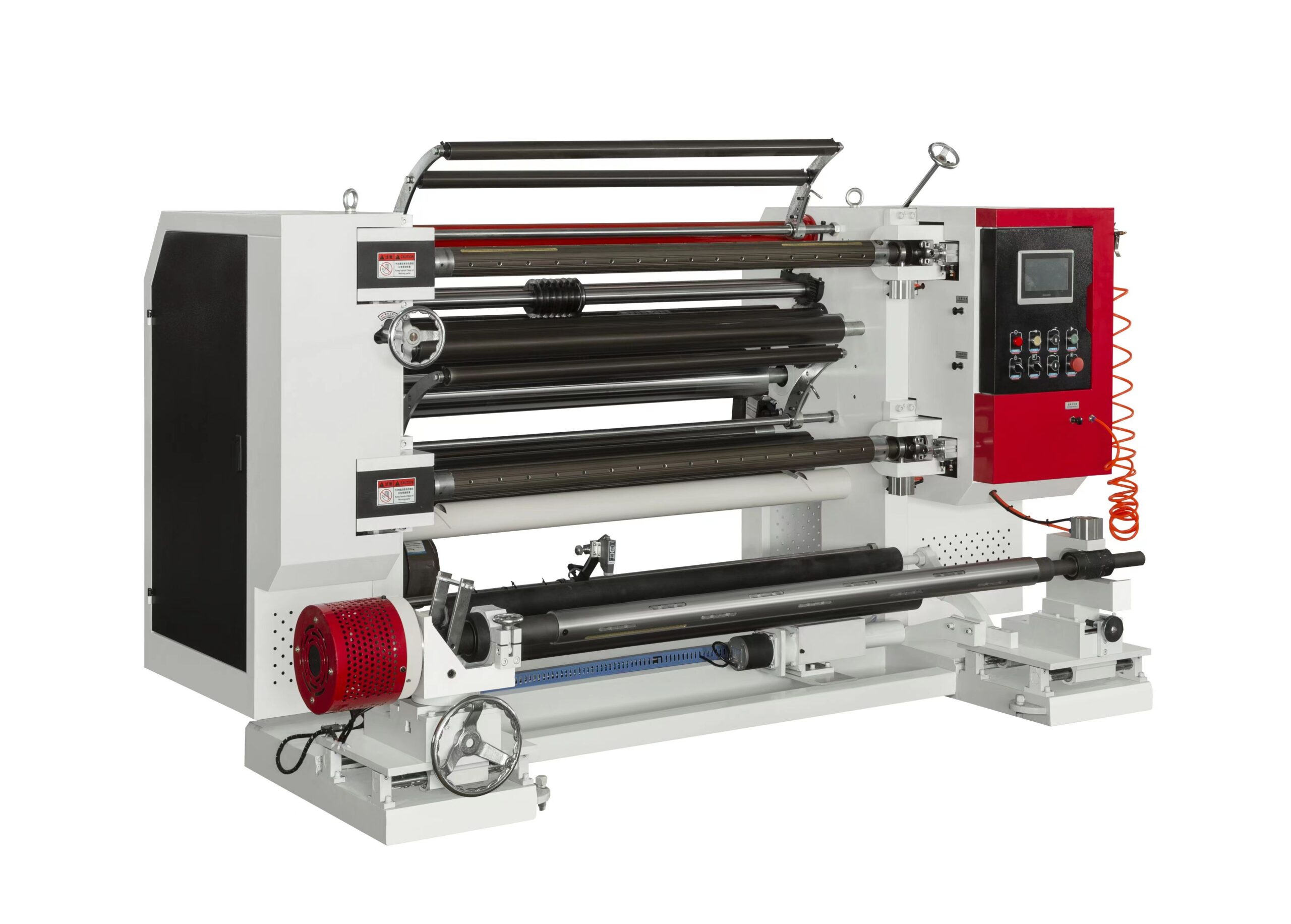
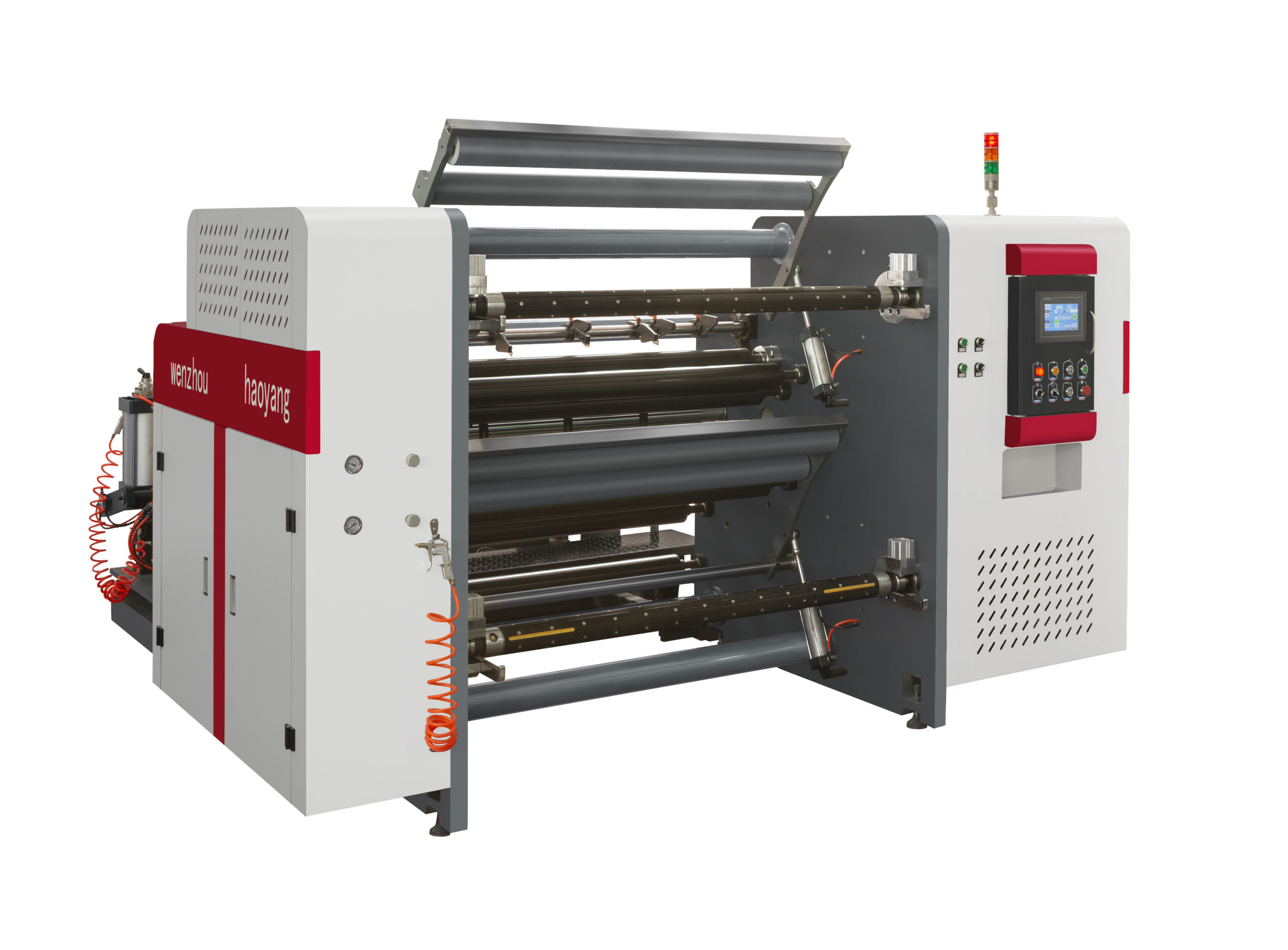
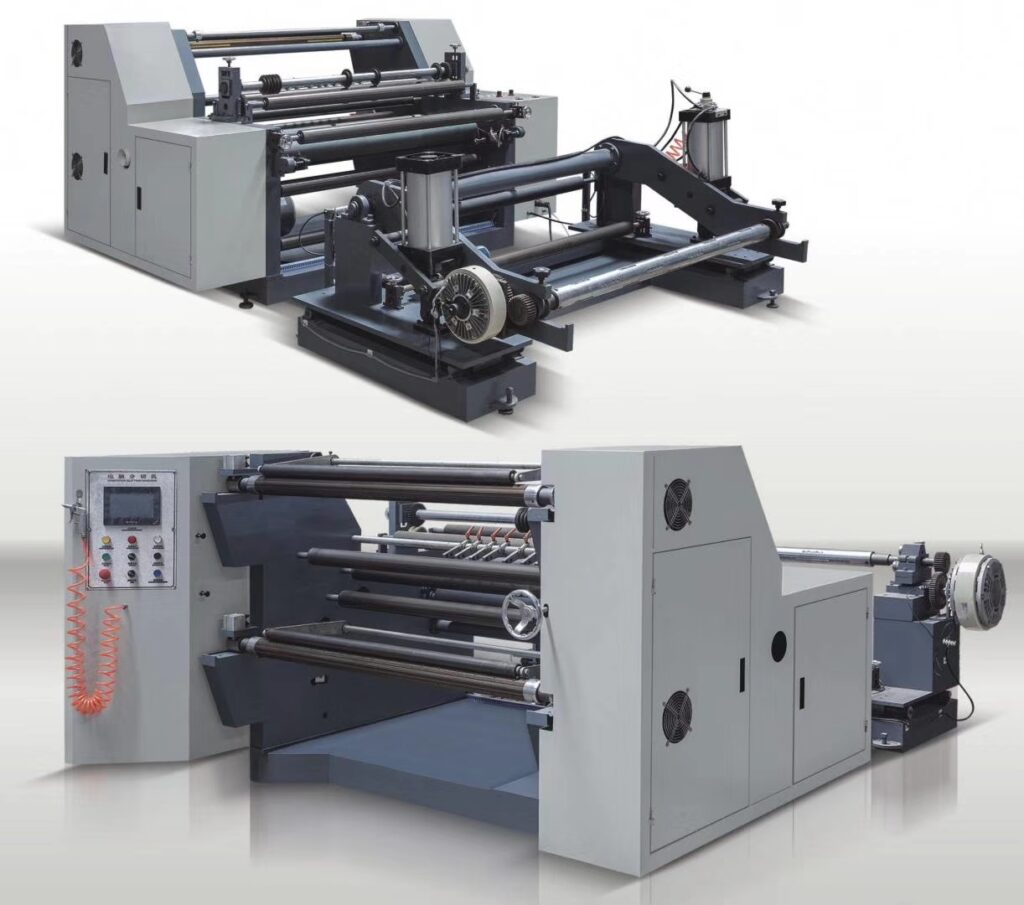
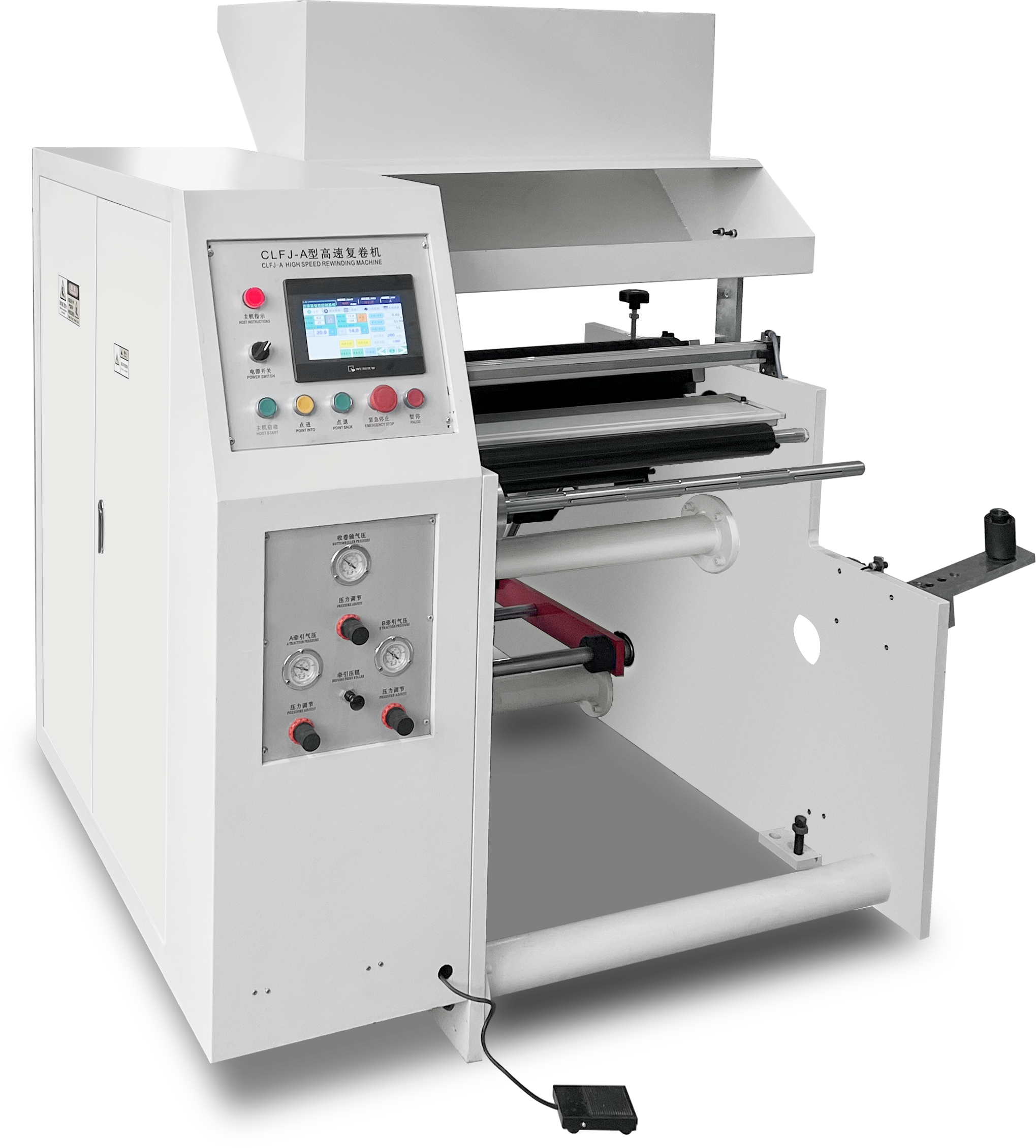
Below are the machines covered on this page. Each card links to the full specification sheet, application notes and price list for that model — the comparison table and selection guide that follow are built from the same factory data.
What Is a Slitting Machine?
A slitting machine — often called a slitter-rewinder — converts one wide master web of material into several narrow finished rolls. The web is loaded onto an unwind shaft, tensioned by rollers, and driven past a set of circular slitting blades mounted on a cutter unit. Each blade cuts a separate lane, and the resulting lanes are wound onto individual paper cores by the rewinding station. Because slitting and rewinding happen in a single pass, the material is handled once instead of being unwound, cut and re-wound as two separate operations.
The machine rolls are typically driven by a motor, either directly or through a timing belt, and the blade shafts rotate at a speed matched to the web line speed. Tapered or differential blade shafts are used where the finished roll diameter must be kept constant while the web is being cut. The rewinding section uses pneumatic or expanding chucks to grip the core, and slitting heads can be manually adjusted, hydraulically positioned, or equipped with automatic blade positioning for repeat orders.
Materials processed on this type of equipment include PE, PP, LLDPE, HDPE, OPP, BOPP, PET, PVC, PA and CPP films, as well as kraft paper, thermal paper, label stock, adhesive tape and non-woven material. The limiting factor in every case is not the blade but the combination of material thickness and cutting speed — a slitter that handles 300 gsm kraft paper comfortably will not necessarily run 300 m/min on thin film without chatter.
Slitting Machine Models and Technical Specifications
The table below compares the five machine families in our slitting range. Specifications shown are the factory standard for each model; belt tension, blade type, core size and unwind/rewind diameter can be adapted to the material you actually run.
| Model | Machine type | Max. loading width (mm) | Slitting width (mm) | Material thickness | Max. unwind / rewind dia. (mm) | Blades (pcs) | Machine speed | Power (kW) |
|---|---|---|---|---|---|---|---|---|
| HFQ-1300 / HFQ-1600 | High speed automatic slitter | 1300 / 1600 | 30–1300 / 30–1600 | 30–300 g/m² | 1400 / 1000 | 3–7 / 3–8 | 50–400 m/min | 26 / 28 |
| FQW-1300 / FQW-1600 | Horizontal type slitter, 2 motors | 1300 / 1600 | 25–1300 / 25–1600 | — | 1100 / 800 | 3–7 / 3–8 | 200 m/min | — |
| FQL-1300 / FQL-1600 | Vertical type slitter | 1300 / 1600 | 25–1300 / 25–1600 | — | 800 / 500 | 3–7 / 3–8 | 160 m/min | — |
| FJ-A650 / FJ-A850 / FJ-A2000 | Rewinding machine | 600 / 800 / 1950 | — | — | Φ600 / Φ800 / Φ1000 → Φ260 | — | 10–180 m/min | 2 / 2.3 / 7.5 |
| FQRM900 | Thermal paper slitter, auto core loading | 865 | 30–865 | — | 1000 / 250 | — | 160–168 m/min | — |
Machine dimensions follow the working width: for example the HFQ-1600 measures 4500 × 3000 × 1850 mm, while the FQL-1300 vertical slitter occupies 2300 × 1500 × 1500 mm. Rewinding machines in the FJ-A series run on single phase 220 V, which means they can be installed without a three-phase supply in a small converting room, while the high-speed and horizontal slitters are three-phase 380 V / 50 Hz.
Main Applications of Slitting Machines
- Flexible packaging film — slitting PE, PP, OPP and PET webs into narrower lanes for flow-wrap, pouch and printed-laminate production.
- Printing and lamination lines — preparing a master web before it enters a flexographic or rotogravure press, and slitting finished web back to customer-specified widths afterwards.
- Paper and kraft paper — rewinding and cutting sack liner, wrapping paper and paper sack rolls for cement and chemical packaging.
- Thermal paper and label stock — the FQRM900 uses automatic core loading and coreless winding for POS receipt rolls and self-adhesive label stock.
- Adhesive tape and non-woven material — slitting BOPP/PVC tape jumbo rolls into finished widths and rewinding non-woven rolls for hygiene products.
- Rewinding and re-spooling — the FJ-A series recovers production from a slitter by rewinding loose web into tight, counted rolls with ±5 mm length accuracy.
How to Choose the Right Slitting Machine
Start from the material, not from the price. A slitter is defined by the thinnest or thickest material it must process and by the widest web you need to accept. If the web is 1500 mm wide and 60 gsm film, an HFQ-1600 with three-phase power and a 400 m/min cap gives you the headroom for two shifts; an FQL-1300 vertical slitter at 160 m/min is the better choice when floor space is tight and speed is not the constraint. Below is the decision path most buyers follow.
- Material and thickness — confirm the gsm or micron range and the material type. The HFQ series is rated to 30–300 g/m², which covers most film and light paper. Kraft paper above 300 gsm needs a heavier machine and more rigid blade shafts.
- Web width — the maximum loading width must exceed your widest master roll. Choosing a machine 100–200 mm wider than the current web gives room to run two grades on the same equipment.
- Output requirement — speed is only one factor. Multiply line speed by the number of lanes to get real output in m/min across the full width. A 160 m/min machine running four lanes produces far more than a 200 m/min machine running one.
- Blade configuration — the number of blades on a shaft sets the minimum slit width. Three to eight blades per shaft allows slitting down to 25–30 mm; more blades means a narrower minimum and a more complex shaft.
- Automation level — manual blade positioning is cheapest and adequate for stable repeat orders. Hydraulic or automatic positioning pays back quickly when job widths change frequently or operators change between shifts.
- Rewinding requirement — if you already slitting downstream, look at core size (20 mm, 25 mm, 38 mm or coreless), finished roll diameter and whether a counter or length-accuracy system is needed. The FJ-A rewinding machines hold length accuracy to ±5 mm.
Why Buyers Choose TWMACHINE
- Eighteen years on one product line. Slitting and rewinding are not a side business for us — the design, blade-shaft and tensioning know-how comes from thousands of running machines.
- Factory-direct pricing. No trading company margin sits between the quotation and the workshop floor, which matters most on the high-speed models where the drive and blade assemblies dominate the cost.
- Five model families in one range. From a 600 mm bench-top rewinder to a 1600 mm high-speed slitter running at 400 m/min, so a growing converter can stay with one supplier across the whole range.
- Specification flexibility. Blade material, belt tension, core size, unwind and rewind diameter, number of slitting units and level of automation are configured to the job rather than fixed.
- Service and spare parts. Machine dimensions, voltage and power are confirmed on the order, and wear parts such as blades, belts, bearings and pneumatic components are supplied from stock.
Frequently Asked Questions
What is the difference between a vertical and a horizontal slitting machine?
A vertical slitter feeds the web from above and cuts downwards, so the machine occupies a small floor footprint and the web path is short. A horizontal slitter feeds the web horizontally through the blade shafts, which allows a wider range of heavy-gauge material and easier access to the cutting area, at the cost of a longer machine and more floor space. For narrow, light film in a confined space the vertical type is usually the more economical choice; for paper and heavy film the horizontal type is more robust.
Can one slitting machine cut several different widths?
Yes. The blade shafts on the HFQ, FQW and FQL series are designed so that the knives can be repositioned to different widths, and with hydraulic or automatic positioning the changeover is done from the control panel without manual blade adjustment. Tell us the range of widths you normally run and we will configure the machine accordingly.
What film thickness can the HFQ high speed slitter handle?
The standard HFQ configuration is rated for 30 to 300 g/m² across a 1300 mm or 1600 mm web, at 50 to 400 m/min. It is used in practice for PE, PP, OPP, BOPP and PET film. If your material is thicker, lighter or a special blend, send us the material specification and we will confirm the suitable blade and shaft configuration with a speed recommendation.
Do you supply the slitter with a rewinding unit?
Yes. All slitters in this range are supplied as slitter-rewinders. If you need rewinding only, without cutting, the FJ-A series rewinding machines cover 600 mm to 1950 mm web widths with a fixed length accuracy of ±5 mm, running on single phase 220 V for the smaller sizes.
Request a Quotation
Send us your material, web width, thickness and required output and we will recommend the model and configuration that fits, with a full specification sheet and an indicative price. Every machine is built to order, so sharing the details of your current product range lets us quote the machine that will actually run your material rather than a generic specification.