Disposable Cap and Shoe Cover Forming Machine Manufacturer in China
TWMACHINE manufactures disposable hygiene equipment forming machines for producers of bouffant caps, non-woven shoe covers and plastic shoe covers. These machines take a non-woven or plastic web, form it into the finished shape and weld or bond the edges in a single continuous process, which is what makes disposable products economical at volume: the material is fed as a roll, cut and seamed automatically, and the operator only changes rolls and bags the output. This page sets out what each machine in the range is designed for, how the process works, and how to choose between them.
Our Disposable Forming Machine Range
Each card links to the full specification sheet, the finished product sample and the price list for that machine.

What Is a Disposable Cap and Shoe Cover Forming Machine?
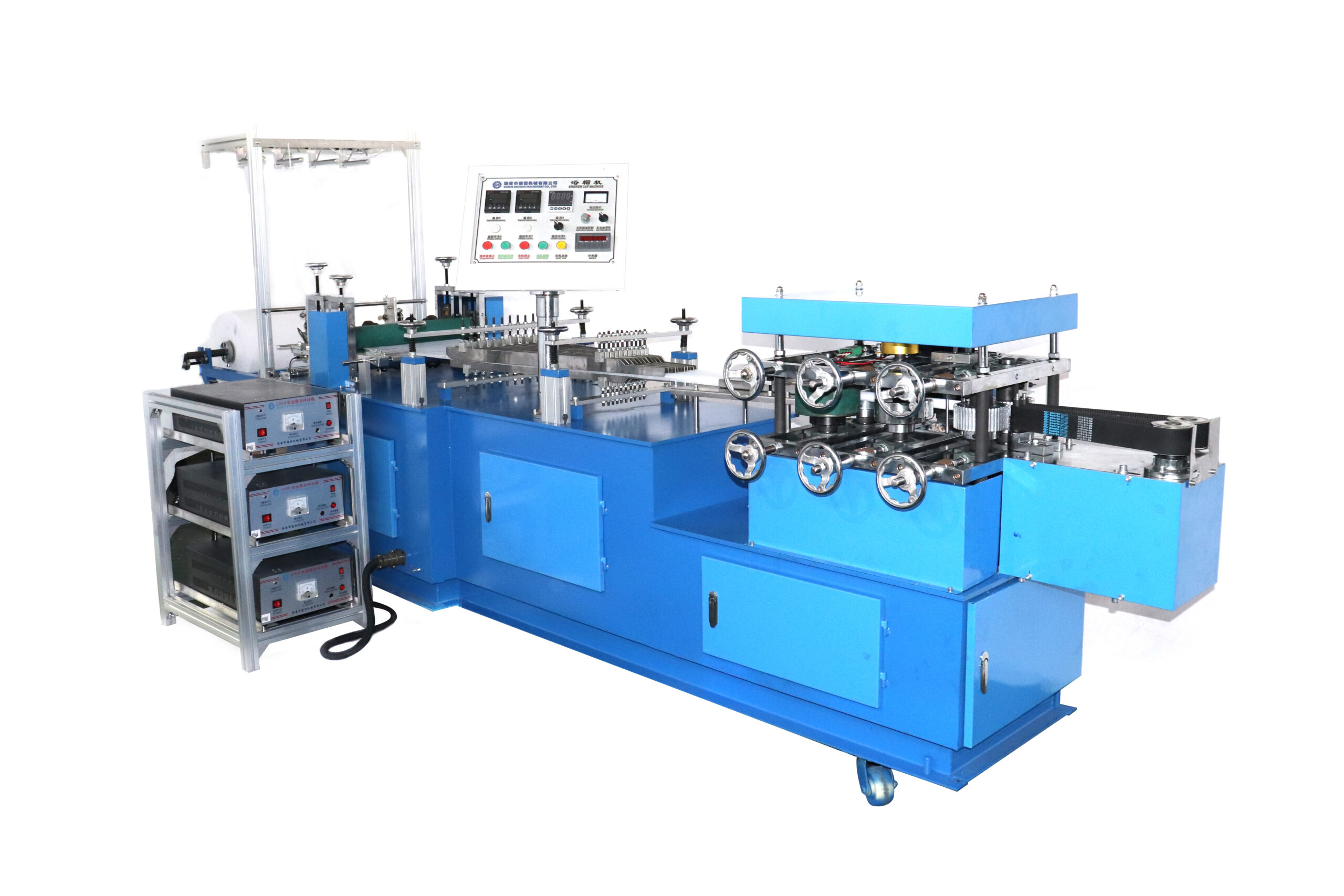
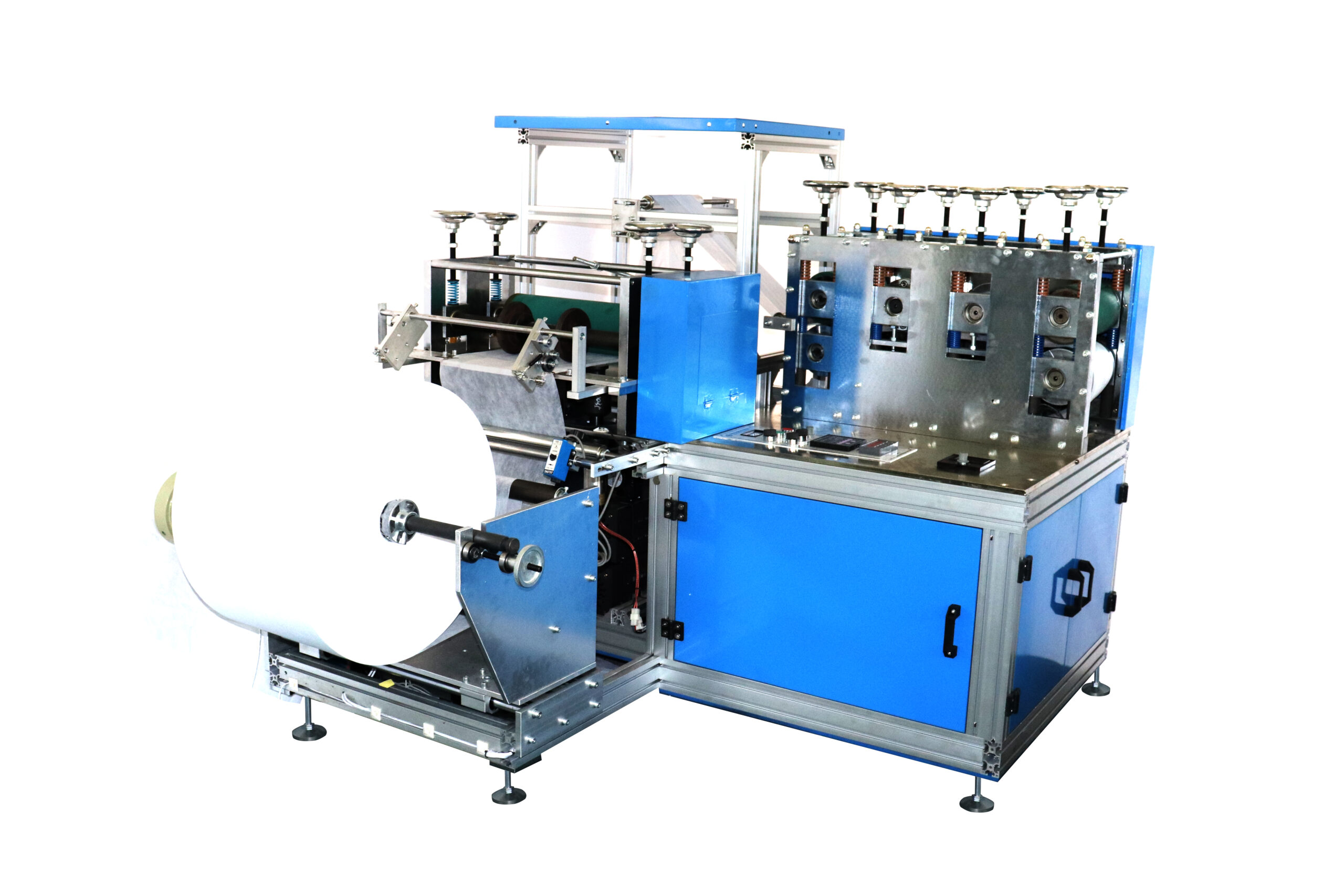
A disposable forming machine produces hygiene products from a continuous web of non-woven or plastic material. The web is unwound and fed into the forming station, where a shaped die presses the flat material into the three dimensional form of the product — the dome of a bouffant cap, the sleeve of a shoe cover. Ultrasonic or heat welding then bonds the edges, and the finished product is cut off and conveyed to the bagging station. Because the shape is formed and the seam is welded in one continuous stroke, there is no separate cutting and sewing operation, and the labour per piece is close to zero.
The three machine types in this range differ in the product and the material. The bouffant cap machine works with spunbond non-woven and produces the classic round cap used in food processing, healthcare and clean room environments. The non-woven shoe cover machine forms a larger, thicker cover with an elastic or non-woven ankle cuff, for use in clean rooms, factories and hospital environments. The plastic shoe cover machine works with PE or PVC film, which is the lower cost option used for visitor and general industrial cover.
Machine Types and What Each One Produces
| Machine | Product | Material | Typical use | Main considerations |
|---|---|---|---|---|
| Disposable Bouffant Cap Forming Machine | Round elasticated bouffant cap | Spunbond non-woven | Food processing, healthcare, clean rooms | Cap diameter, elastic or double band attachment, whether the ear band is welded or elasticated |
| Disposable Non-Woven Shoe Cover Machine | Non-woven shoe cover with cuff | Non-woven, spunbond or SMS | Clean room, electronics, hospital, factory | Cover size range, cuff type, whether the cuff is welded or elasticated |
| Disposable Plastic Shoe Cover Machine | PE or PVC shoe cover | PE or PVC film | Visitor cover, general industrial hygiene | Film thickness, single or double layer film, printed or plain |
Main Applications
- Food processing and meat plants — bouffant caps and hair nets as part of the hygiene regime required for food handling areas.
- Healthcare and pharmaceuticals — disposable head cover and shoe cover for isolation rooms, laboratories and production areas.
- Electronics and clean room production — non-woven shoe covers in clean rooms where particle control matters more than cost.
- Factories and industrial facilities — plastic or non-woven shoe covers for visitors and for production floor hygiene.
- Disposable product distributors — running a machine in-house is usually cheaper than buying finished covers in volume once volume reaches a reasonable level.
How to Choose the Right Forming Machine
Three decisions matter here: the product, the material and the volume. The machines are not interchangeable, so the first two are effectively fixed by your market.
- Which product do you need to sell — a cap machine and a shoe cover machine are different machines. If you are supplying both to the same customer, buying two machines is normally cheaper than a compromise machine that does neither well.
- Material — non-woven requires ultrasonic welding and a different feed system than PE or PVC film, which is heat welded. The machine and the material have to match.
- Size range — cap diameters and shoe cover sizes are adjustable on these machines within a range, but a wide range means more settings and more changeover time. Specify the two or three sizes that sell best rather than the widest possible range.
- Elastic attachment — elasticated products need an elastic feeding and cutting unit, which changes the machine configuration and the price. Decide whether elastic is needed before requesting a quotation.
- Output — send us the monthly quantity and the number of shifts. The output requirement determines whether one machine covers your volume or whether you need two, and it is usually the single biggest factor in the cost per piece.
- Printing and finishing — printing on non-woven is done separately, before the forming machine, on a printing line. If you need printed products, plan the printing step in front rather than looking for it on the forming machine.
Why Buyers Choose TWMACHINE
- Disposable equipment is our speciality. These are not adapted from a different product line; the forming die, the welding head and the feed are designed for non-woven and film hygiene products.
- Factory-direct pricing. The ultrasonic or heat welding system, the forming die and the automatic bagging are built in our own workshop, which is what decides the cost per piece on a high output machine.
- Automatic operation end to end. Roll feeding, forming, welding, cutting, conveying and bagging run continuously, so one operator can tend more than one machine.
- Configured to your product. Product size, material type, elastic attachment, welding method, bagging system and output speed are specified per order.
- Service and wear parts. Welding horns, anvils, blades, belts, ultrasonic generators and heaters are supplied from stock, and machine dimensions, power and air requirements are confirmed on the order.
Frequently Asked Questions
What is the difference between non-woven and plastic shoe covers?
Non-woven covers are spunbond or SMS material, cut and welded with ultrasonic vibration, and they are breathable, dust resistant and comfortable for long shifts, which is why they are used in clean rooms and hospitals. Plastic covers are made from PE or PVC film, are much cheaper per piece, and are used for visitors and general industrial hygiene where the cover is worn for a short time. The film version needs less material and less energy to produce, which is why it is the standard choice outside the clean room.
Can one machine make several cap sizes?
Cap diameter is adjustable within the machine range, but each change takes a mechanical adjustment and a trial run. The practical advice is to run two or three standard sizes that cover most of your demand and order the machine for that range, rather than specifying the widest possible adjustment. If you need a genuinely wide size range across different customers, tell us the sizes and their volumes and we will confirm what is practical.
How many operators does a machine need?
One operator per machine for the standard configuration, and often one operator covering two machines on the same shift. The operator loads the material roll, threads and joins the web, changes the finished product bag and checks the weld quality. Everything between those points — forming, welding, cutting, conveying and counting — is automatic. We can specify an automatic bagging and counting system so the finished product is packed without manual handling.
Can the machine produce printed products?
Printing is done on the material before it reaches the forming machine, not on the finished cap or cover, because the forming process would distort the print on the curved surface. For printed non-woven, a printing line is placed in front of the forming machine and the printed roll is then fed into it. If printed products are part of your offer, tell us the number of colours and the print repeat so the feeding speed can be matched to the printer.
Request a Quotation
Send us the product, the material, the sizes you need, your monthly quantity and the number of shifts. We will recommend the machine and configuration that fits, with a full specification sheet, a layout and utility drawing and an indicative price. Because these machines are built to order, the more specific the product description, the more accurate the cost per piece we can quote you.