
To provide a comprehensive analysis of the common three-side seal composite bags and the latest eight-side seal bags on the market, we need to break them down from three core technical dimensions: Material Composition, Seal Shape Characteristics, and Production Machine Types. Below is a detailed comparative analysis.
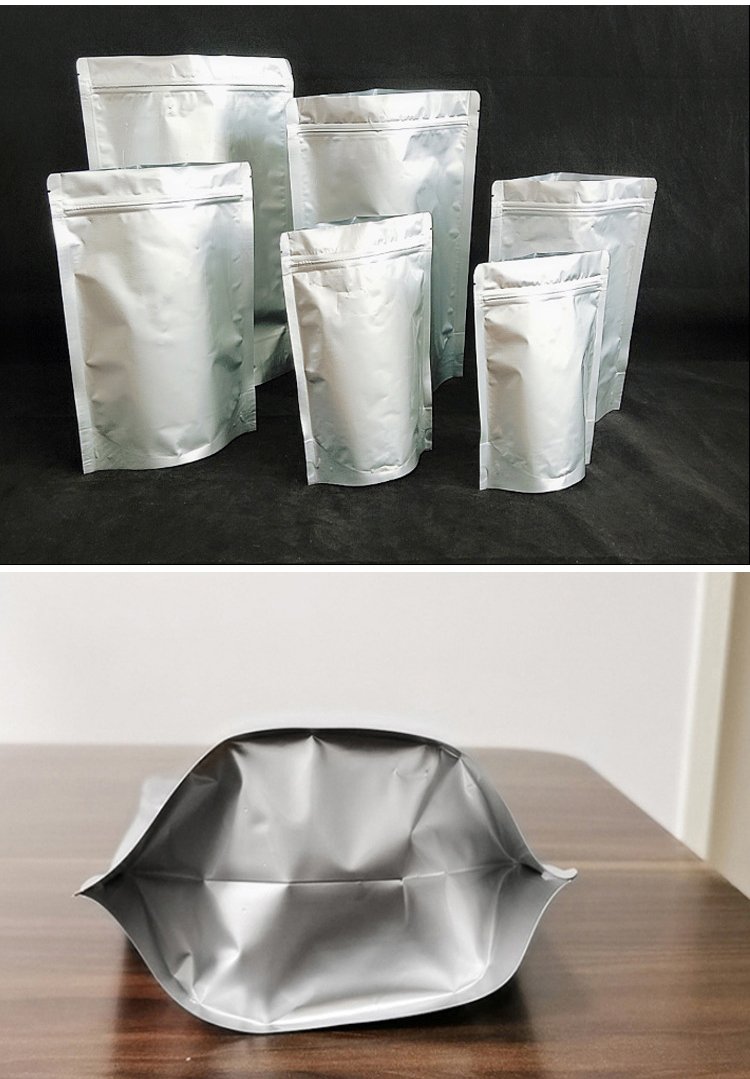
Part I: Analysis of Composite Three-Side Seal Bags
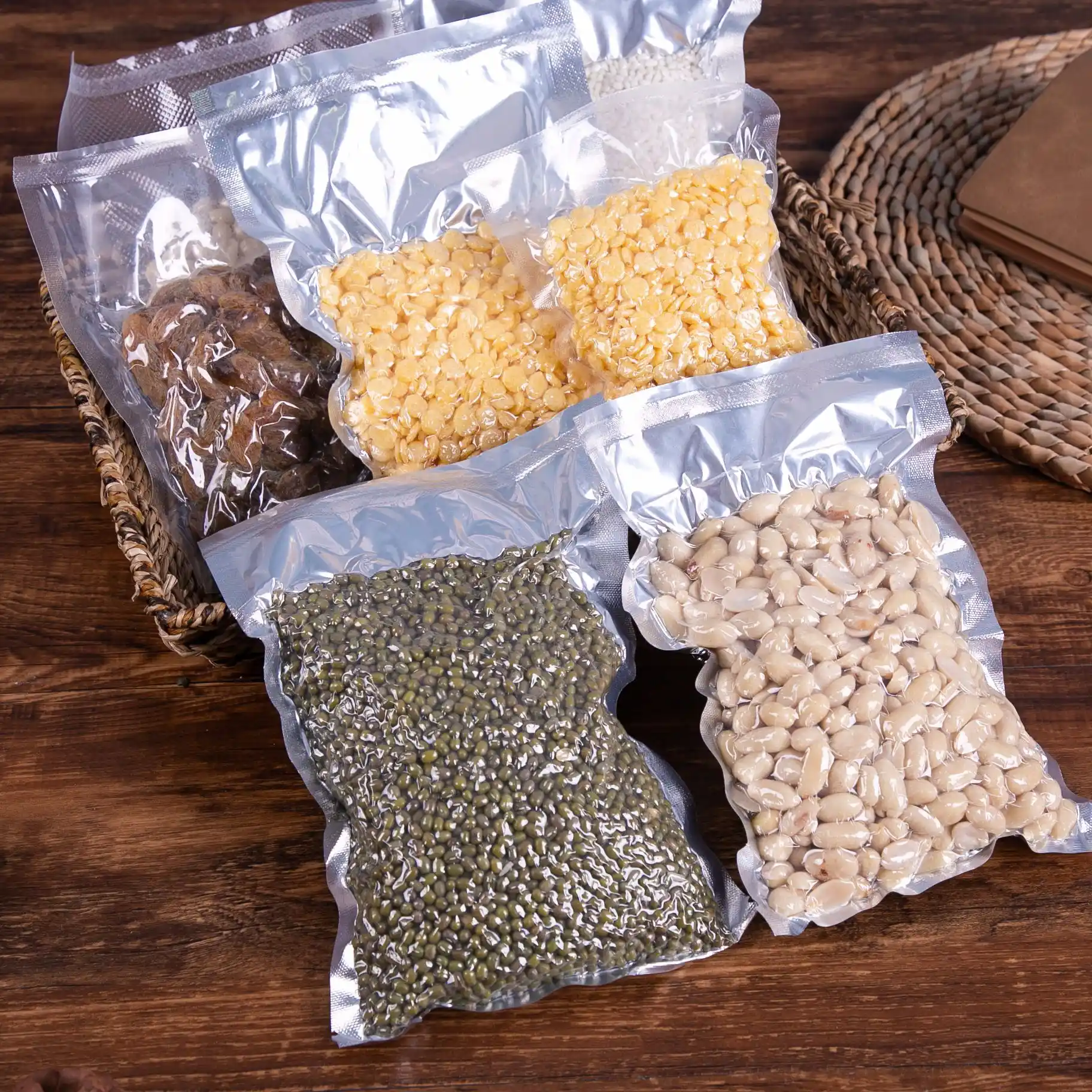
The three-side seal bag is the most fundamental and widely used type in flexible packaging. Its forming principle involves folding a piece of composite material in half and then heat-sealing the folded side and the top, creating seals on two sides and one top (hence, three-side seal).
1. Material Analysis
Three-side seal bags use a multi-layer composite film structure to provide different barrier properties and physical strength.
- Outer Layer (Printing/Support Layer): Typically uses materials like BOPP, PET, or Nylon. These materials offer good printability, transparency, and puncture resistance.
- Middle Layer (Functional Layer): To meet high barrier requirements, the middle layer is often laminated with Metallized PET (VMPET) or Aluminum Foil (AL) to block oxygen and light, extending product shelf life.
- Inner Layer (Heat Seal Layer): Primarily PE (Polyethylene) or CPP (Cast Polypropylene) . This layer contacts the product directly and melts under the heat-sealing bar of the bag-making machine to form a strong seal.
- Eco-friendly & Specialty Materials: With increasing environmental awareness, materials like paper-plastic composites (e.g., for express mailers) and films with added anti-static or antibacterial coatings are also used.
2. Seal Shape and Machine Type
The seals on a three-side seal bag form a “U” or “L” shape (depending on the folding method), with consistent seal width and a flat bag body.
- Bag-Making Machine Type: Primarily uses Three-side/Four-side Seal Bag Making Machines or Multi-functional Bag Making Machines.
- Forming Process:
- Horizontal Bag Making: Used for producing pre-made bags. The roll film undergoes unwinding, guiding, first heat seal (longitudinal seal), second heat seal (cross seal), cooling, and cutting to form individual bags. High-end models use PLC and Servo Motor Control, achieving speeds of over 200 bags per minute.
- Vertical Form-Fill-Seal (VFFS) Machine: Used for on-site packaging. The machine forms the film into a tube, seals the back longitudinally, seals the bottom and top crosswise, and fills the product simultaneously. This is common for automated packaging of snacks and granular products.
3. Applications, Advantages, and Disadvantages
- Applications: Widely used for cosmetics, pharmaceuticals (high privacy needs), electronics (anti-static packaging), and various snacks, powders, and liquid products in small doses.
- Advantages: Mature production process, high efficiency, relatively low cost, good sealability (e.g., fully sealed structures used by Huawei for anti-tampering).
- Disadvantages: Limited bag shape, relatively small shelf display area, poor three-dimensional appearance, and poor self-standing ability (unless a gusset is added to the bottom).
Part II: Analysis of the Latest Eight-Side Seal Bags
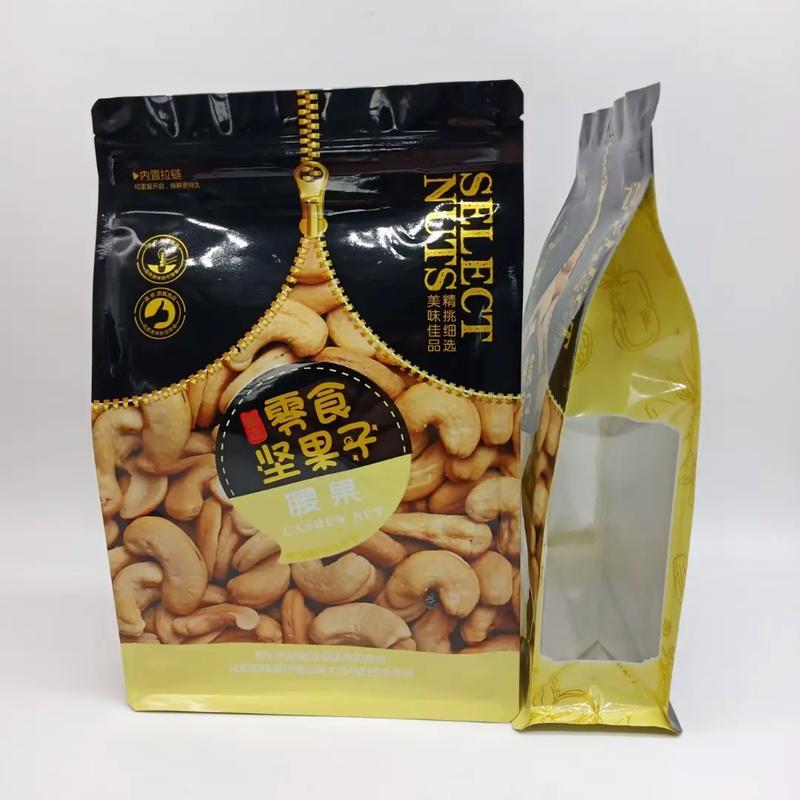
The eight-side seal bag (also known as octagonal bag, square bottom bag, or magic cube bag) is a premium packaging form that has gained popularity in recent years due to its unique cubic shape and excellent shelf presence.
1. Material Analysis
The material composition is similar to three-side seal bags, but demands higher strength, especially for large-capacity or heavy-duty packaging.
- Standard Food-Grade Materials: Similar to three-side seal bags, e.g., Matte OPP + VMPET + PE, used for dried fruits, tea, etc.
- High-Barrier Materials: For products like coffee or pet food, materials containing Aluminum Foil (AL) are common. Nylon (PA) layers might be added to enhance puncture resistance, often combined with one-way degassing valves.
- Heavy-Duty & Specialty Materials: For heavy items like cat litter or fertilizer, composites like PE/PP + reinforcement layer (e.g., woven fabric or kraft paper) are used to ensure the bag can withstand weights of 10kg-20kg without bursting.
2. Seal Shape and Machine Type
The defining feature of an eight-side seal bag is its cubic shape, formed by four seals at the bottom and two on each side.
- Bag-Making Machine Type: Requires a Specialized Eight-Side Seal Bag Making Machine or a multi-functional machine equipped with a custom eight-side seal heat-sealing die.
- Key Forming Process:
- One-Step Forming & Heat Sealing: During the bag-making process, a specialized heat-sealing die performs multiple actions simultaneously: pressing the two parallel bottom seals, pressing the two triangular side seals, and forming the gusset creases.
- Composition of the “Eight Seals”: Specifically, it consists of 1 central longitudinal bottom seal, 2 transverse bottom seals, 2 bottom triangular seals (each formed by two short edges, often considered one “side”), and 2 vertical side seals. These eight seals form the structural skeleton of the bag.
- Bottom & Side Reinforcement: The side seals extend from the top to the bottom of the bag, typically overlapping and reinforcing the previously formed triangular areas to prevent tearing at the corners under weight.
3. Applications, Advantages, and Disadvantages
- Applications: Widely used for premium e-commerce brands (e.g., Three Squirrels), coffee beans, pet food (kibble), cat litter, bulk tea, and any product requiring high shelf appeal.
- Advantages:
- Strong 3D Appearance & Premium Look: The square bottom and sturdy sides make the bag easy to display on shelves and create a strong visual impact.
- Excellent Load-Bearing & Stacking Stability: The cubic structure evenly distributes weight, preventing stress concentration and allowing for stable stacking, making it ideal for large-capacity packaging.
- Good Functional Expandability: Often combined with resealable zippers and one-way degassing valves, balancing tight sealing with convenient reusability.
- Disadvantages: Complex production process, high equipment cost, lower production efficiency compared to three-side seal bags, and higher price point.
| Dimension | Composite Three-Side Seal Bag | Eight-Side Seal Bag |
|---|---|---|
| Material | BOPP/PET/Nylon + VMPET/AL + PE/CPP | Similar, but heavy-duty applications add woven fabric/kraft paper reinforcement |
| Seal Feature | Three sealed edges (U or L shape), flat body | Eight sealed edges (4 at bottom + 2 on sides), cubic structure |
| Core Equipment | Three-side Seal Bagger / Vertical VFFS Machine | Specialized Eight-Side Seal Bagger + Custom Die |
| Main Uses | Pharmaceuticals, cosmetics, small snacks, powders, small electronics | Premium snacks, coffee, cat litter, pet food, bulk tea |
Conclusion
Looking at market trends, the three-side seal bag, with its mature process and cost advantages, maintains a dominant position in conventional daily chemicals, pharmaceuticals, and small-dose food packaging. In contrast, the eight-side seal bag represents a shift in packaging from a mere “containment vessel” to a “marketing tool.” By mimicking the shape of a rigid box, it solves the pain points of traditional flexible pouches, such as poor standing ability and stacking instability. Despite higher costs, its significant benefits in enhancing product premium perception and consumer experience make it a mainstream trend for high-end snack and pet food packaging in the future.
No responses yet